Dr. Pol gets Emotional Remembering losing his father to …

Dr. Jan Pol, a name synonymous with compassion, veterinary medicine, and family values, has become a beloved figure through his show The Incredible Dr. Pol, which has captivated audiences for over a decade. His straightforward, no-nonsense approach to animal care, coupled with his warm demeanor, has made him a household name. Yet, beyond his professional success lies a deeply personal story, one marked by love, loss, and resilience, particularly with his wife Diane, whose support through life’s toughest moments has been as steadfast as it is inspiring.
The Man Behind the Legacy: Dr. Jan Pol

Born and raised in the Netherlands, Dr. Jan Pol’s journey into veterinary medicine began early in life. Growing up on a farm, Pol developed a deep affection for animals, which ultimately led him to pursue veterinary science. After completing his education in the Netherlands, he seized an opportunity to participate in an exchange program in Michigan, setting the stage for a monumental change in both his career and personal life.

In the summer of 1961, at the Detroit airport, Pol encountered the woman who would later become his wife, Diane. Their love story, much like Dr. Pol’s career, developed organically and over time. As Dr. Pol often recounts, his first impression of Diane was somewhat surprising. “I saw her standing there and thought, ‘My gosh, she’s tall!’” he reminisces with a smile. Despite the humorous initial observation, it wasn’t love at first sight. In fact, it took several months of friendship, growth, and shared experiences before their bond began to deepen.

A Love Grown Slowly, Yet Strongly

Diane recalls the moment she first realized her feelings for Jan. “He asked one of my friends out for a Christmas party, and I thought, huh. There was just something happening then.” It wasn’t a dramatic or immediate revelation, but rather a gradual awareness that this man, who had come from a distant country, was becoming someone very important in her life. During the time that Jan spent in Michigan as an exchange student, the two built the foundation of what would become a lifelong partnership.

After the exchange program ended, Jan returned to the Netherlands while Diane continued her studies in Michigan. However, their connection only grew stronger. Letters, written with the care and patience that defined their relationship, became their primary means of communication. “We wrote once a month,” Diane shared. These letters kept their bond alive, and eventually, their relationship blossomed into something more profound.

A Relationship Tested by Distance and Tragedy

The couple’s relationship faced an early test, not just from the physical distance between Michigan and the Netherlands, but also from a deeply personal tragedy that would soon unfold. After just two years back in the Netherlands, Dr. Pol’s father was diagnosed with bone cancer. It was an emotionally challenging time for Jan, who was still very much connected to his family despite the distance. His parents had visited him during his time in Michigan, which further strengthened their bond with Diane.

The diagnosis of Jan’s father hit hard. As Jan wrote to Diane about the illness, it became clear to her that the man she had grown to love was in need of support. Demonstrating the selflessness and loyalty that has defined her throughout their relationship, Diane made the decision to travel to the Netherlands in 1964 to help Jan and his family through this difficult period.

A Defining Moment in Their Love Story

In the Pol family home, Diane quietly took on the role of caregiver. She helped with the cooking, cleaning, and all the necessary duties as Jan and his family focused on his father’s care. Diane’s quiet strength during this time had a profound impact on Jan. “You know that you can depend on each other,” he said of this time, reflecting on how their relationship solidified through shared adversity.

After this period, Jan and Diane’s relationship took on a new depth. They began writing to each other more frequently—once a week—exchanging not just letters, but their hopes, fears, and dreams for the future. These letters were a lifeline that kept their bond alive through the years of separation.

A Tragic Loss: Dr. Pol’s Father Passes Away

The couple’s shared experience in caring for Jan’s father would leave an indelible mark on their relationship. The experience of witnessing his father’s slow decline, as well as the emotional and physical toll that cancer had on him, was deeply painful for Jan. Yet, it was also in this moment that Jan recognized Diane as his partner in every sense of the word.

Despite their efforts and the unwavering care provided by both Jan and Diane, Dr. Pol’s father ultimately passed away from cancer in 1964. His passing, though tragic, was a turning point in Jan’s life. Not only did it teach him about the importance of family and caregiving, but it also cemented the foundation of his relationship with Diane.

Through this period of grief, the couple emerged stronger. They had faced one of life’s most difficult challenges together, and in doing so, they learned that they could depend on each other in any circumstance. After Jan’s father passed away, he and Diane continued to grow closer, eventually leading to their marriage—a union built on love, mutual respect, and shared values.

The Pol Legacy: Love, Family, and Resilience

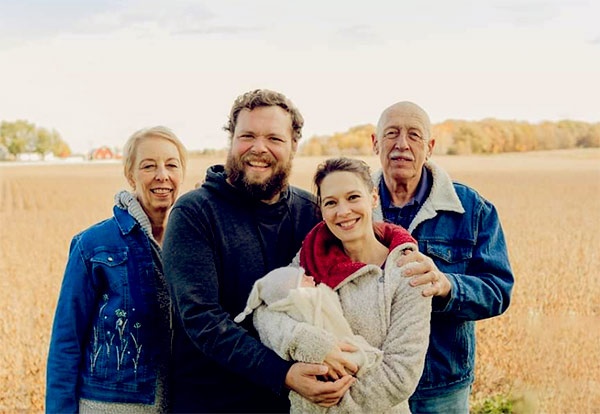
Fast forward to today, and the Pol family continues to share their journey with millions of viewers through their long-running National Geographic series, The Incredible Dr. Pol. Fans of the show have witnessed not only Dr. Pol’s remarkable skills as a veterinarian but also the deep bond he shares with his wife Diane, their son Charles, and their extended family.

In addition to their show, the Pol family has expanded their ventures into The Incredible Pol Farm and launched their podcast, Incredi-Pol Cast. Whether it’s through their love of animals, their dedication to their family, or their openness with fans, the Pols have shown that love—whether romantic, familial, or communal—can truly conquer all.

Ahead of Valentine’s Day, Dr. Pol, Diane, Charles, and Beth reflect on the various forms of love that have carried them through the years. For Dr. Pol, his father’s battle with cancer, the role Diane played during that difficult time, and the love they built together during it all are constants in his heart. This love continues to be at the core of the Pol family—one of strength, resilience, and unwavering support, no matter what life throws their way.

As Diane quietly tended to his family during one of the darkest times in his life, Dr. Pol realized the true depth of their connection. Through life’s challenges, including the tragic passing of his father from bone cancer, their love has only grown stronger, becoming a beacon of hope and resilience for all those who follow their story.

Veterinarian Annual Salary: Veterinary Assistant, Technician Salary.

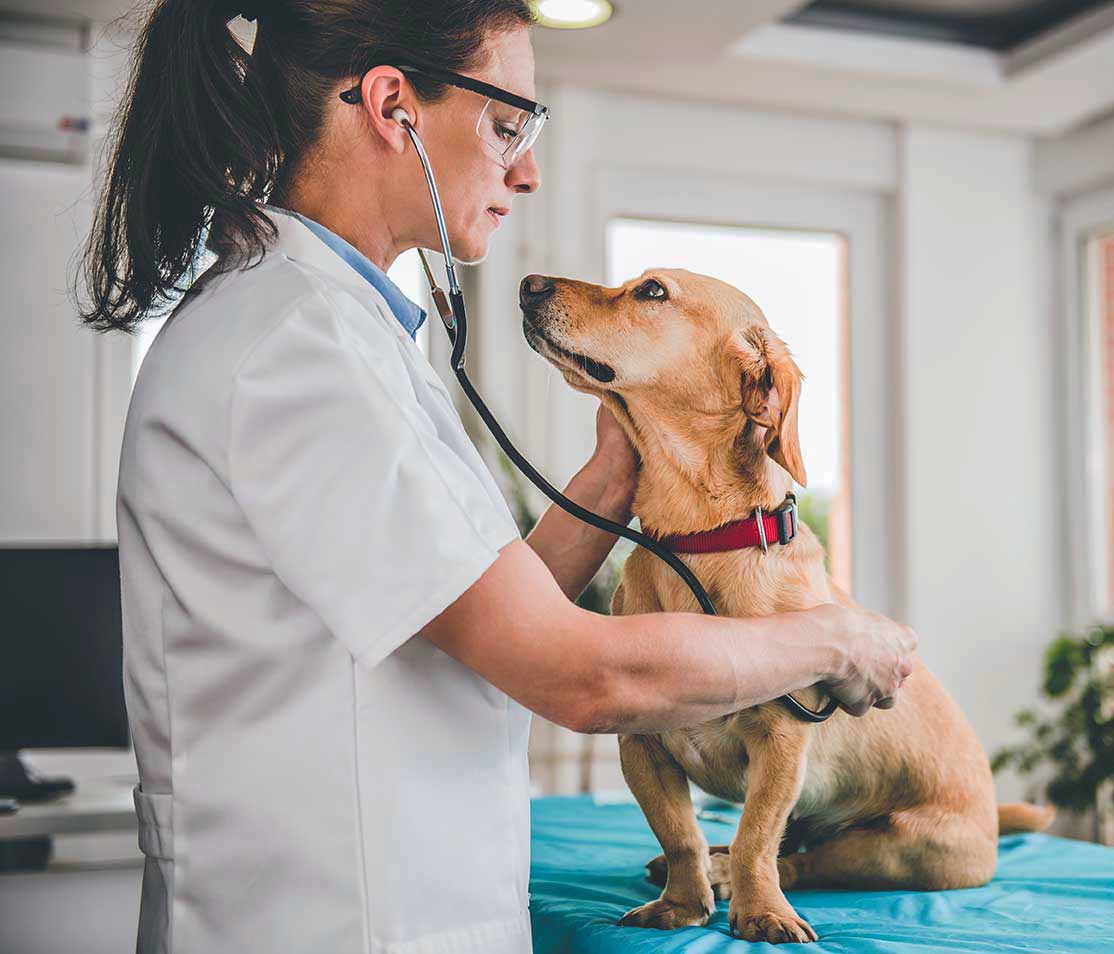
The veterinary field is one that focuses on giving a medical diagnosis, treatment, and care to sick animals. A veterinarian is an animal doctor who performs diagnosis, surgery, and treatment to sick animals. On the other hand, a Veterinary Technician is a trained professional who does complimentary vet work alongside a Veterinarian.

A Veterinary Technician typically takes x-rays, vaccinates, and conduct blood tests. A Veterinary Assistant helps with the preparation of examination rooms, dressing wounds, restraining animals, cleaning medical tools, inoculating animals, and taking animal vital signs. To find out the salaries associated with these noble professions, keep reading our in-depth article.

Who is Veterinarian, aka Veterinary Surgeon?

A Veterinarian, as aforementioned, is the equivalent of a human’s General Practitioner for animals. Typically, a Veterinarian is a highly learned and qualified individual. To become a Veterinarian, one has to undergo many years of formal education.

To get the enviable title of a Veterinarian, one has first to complete a four-year undergraduate course after high school. After getting the first degree, one can then join a Veterinary Medicine program for another four years. This means that a Veterinarian has to have a minimum of eight years of undergraduate education to get a job. Most universities offer the Doctor of Veterinary Medicine degree. The bachelor’s degrees in this field include Bachelor of Veterinary Medicine, Bachelor of Veterinary Science, Bachelor of Veterinary Medicine and Surgery.

After completing the undergraduate program, a Veterinarian can choose to get an internship. Typically, a vet who starts his or her career with an internship earns more than those who choose not to get an internship. This is because internships increase the vet’s experience, which translates to a higher wage.

Veterinary Surgeon salary

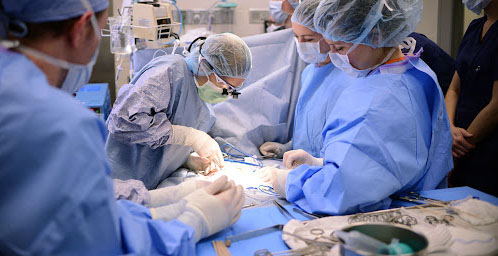
A Veterinary Surgeon usually performs operations on animals to treat conditions associated with hearts, bones, muscles, and the brain. A Veterinary Surgeon can also specialize in fields like oncology surgery, treating wounds and traumatic injuries, or joint surgery. To become a Veterinary Surgeon, one has to complete a degree in Veterinary Medicine and then complete a one-year internship. After that, the vet has to complete a three-year residency in a clinic or animal hospital. After the residency program, one then has to pass a board exam to start practicing.

Veterinarian Salary.

Veterinary Medicine is one of the better-paying professions in the U.S. The average pay of a vet in the U.S. is $90,500. The hourly average paid to vets is about $44. However, the pay differs from state to state and is also based on the level of education, years of experience, the field of specialization, and area of expertise.

The median starting salary for a vet who sees pet animals or companion animals is about $67,200. If a vet works with farm animals like cattle and sheep, the average starting salary is typically higher, about $76,700. A vet who attends only to horses starts out earning $47,800 annually.

A Veterinary Surgeon earns an average of $91,500 in the U.S. The starting salary is usually $44,000. However, it all depends on the state one is practicing in and the specialty of the surgeon. Some Veterinary Surgeons can earn over $160,000 annually. In fact, in the area of Lubbock, Texas, a vet earns an average salary of $228,500. The best paying states for Veterinarians are Virginia, Texas, California, Alaska, and New Jersey. The salary in each state also varies depending on the industry the vet works in. Managerial positions and consulting services are some of the best-paying ones. Typically, vets in these industries can make over $135,000. Scientific research and development pay from $111,000. On the other hand, clinics pay from $120,000.

Veterinary salary

The working hours per week for a vet are 40. However, a vet can be called in to attend to emergencies outside their working hours. However, it all a part of the job as saving lives comes first. The Veterinarian field is projected to continue growing as more than 16,000 new jobs are expected to be open by 2030. This represents a 20 percent growth making the field a highly marketable one. Besides, job security for the field is high.

Veterinary Technician Salary.

Veterinary Technicians give medical care to sick animals through carrying out blood sample testing, taking x-rays of sick animals, feed and clean animals, and administering vaccines. The Veterinary Technician field is easier to join as it doesn’t require many years of study like Veterinary Surgery or Medicine. All one needs is an associate’s degree in Veterinary Technology.

After completing the degree program, one has to pass a state exam to be certified to practice. However, a Veterinary Technologist studies two years more than a Veterinary Technician and is usually awarded a bachelor’s degree. The field is expected to continue growing in the next 10 years as more people get pets. So if you were contemplating joining the field, you can’t go wrong.

The average salary of a Veterinary Technician is about $31,000. On the other hand, a Veterinary Technologist’s average salary is about $38,500. Veterinary Technicians working in Universities, schools, and colleges earn higher than those who work in animal clinics. The former earn an average salary ranging from $40,000 to $49,000. The starting salary for a veterinary technician is about $27,880. Some of the best paying states for a Veterinary Technician are New York, Washington, Massachusetts, and New Hampshire. In these states, the average salary for Vet Technicians is about $34,000.

Veterinary Assistant Salary.

The Vet Assistant field is one of the easiest and most flexible practices in the veterinary field. Moreover, one doesn’t need an undergraduate certification to become a Veterinary Assistant. A high school diploma is all one needs, and the rest is learned on the job. Moreover, the vet assistant field is more flexible than a vet technician as there are options to work part-time.

Typically, a vet assistant helps a veterinarian around the clinic. They do a range of tasks like cleaning and feeding sick animals, cleaning medical tools, and other clerical tasks that they may be assigned. Due to the nature of their work, vet assistants need to be patient, loving, empathetic and also possess some degree of physical strength to help in restraining animals for procedures. Sick animals are usually distressed, and they could inflict injuries if they feel threatened. Thus, a vet assistant must always take all necessary precautions when handling animals to avoid bites, scratches, dangerous pecking, kicks, and other defense behaviors a sick animal may exhibit.

A vet assistant works in a range of industries such as clinics and animal hospitals, animal rescue centers, laboratories, and in learning institutions like colleges and universities. They work alongside veterinarians and vet technicians. A vet assistant not only helps a veterinarian on duty, but they also assist vet technicians too.

The average yearly salary of a Vet Assistant is $26,140. From this, the hourly rate a Vet Assistant earns is $12.57. However, the earnings of a Vet Assistant also depend on the industry one works with. For example, vet assistants who work in universities and private colleges earn an average of $37,000. Generally, a vet assistant earns less than vet technicians as their jobs are easier and do not require an undergraduate degree, as in the case of vet techs.

The vet assistant field is a marketable one, and there are many opportunities to get a job thanks to an increase in pet ownership. By 2030, it is projected that over 16,000 new vet assistant jobs will be created. As a result, job security in this field is also high.

Veterinary Assistant Salary by State.

STATE AVG HOURLY RATE AVG ANNUAL SALARY
Alabama $13.30 $27,700
Alaska $15.20 $31,700
Arizona $14.10 $29,400
Arkansas $13.40 $27,800
California $15.00 $31,000
Colorado $14.30 $29,700
Connecticut $15.20 $31,900
Delaware $14.30 $29,800
District of Columbia $14.30 $29,700
Florida $12.80 $26,700
Georgia $13.60 $28,300
Hawaii $15.90 $33,000
Idaho $15.20 $31,700
Illinois $13.30 $27,700
Indiana $14.00 $29,200
Iowa $13.80 $28,600
Kansas $14.10 $29,300
Kentucky $14.50 $30,500
Louisiana $13.90 $28,900
Maine $13.90 $29,000
Maryland $15.50 $32,000
Massachusetts $16.50 $34,300
Michigan $13.40 $27,900
Minnesota $14.30 $30,000
Mississippi $13.20 $27,400
Missouri $13.10 $27,300
Montana $15.20 $31,700
Nebraska $15.10 $31,500
Nevada $15.20 $31,700
New Hampshire $16.05 $33,500
New Jersey $14.50 $30,200
New Mexico $13.40 $28,000
New York $16.60 $34,700
North Carolina $12.20 $25,400
North Dakota $15.20 $31,700
Ohio $14.20 $29,500
Oklahoma $14.00 $29,100
Oregon $14.30 $29,800
Pennsylvania $14.40 $30,000
Rhode Island $15.20 $31,500
South Carolina $14.30 $30,000
South Dakota $14.50 $30,500
Tennessee $14.30 $29,700
Texas $13.50 $28,000
Utah $14.10 $29,200
Vermont $15.10 $31,500
Virginia $15.00 $31,000
Washington $16.30 $34,100
West Virginia $14.50 $30,200
Wisconsin $14.20 $29,500
Wyoming $15.20 $31,700

Veterinary Ophthalmologist Salary.

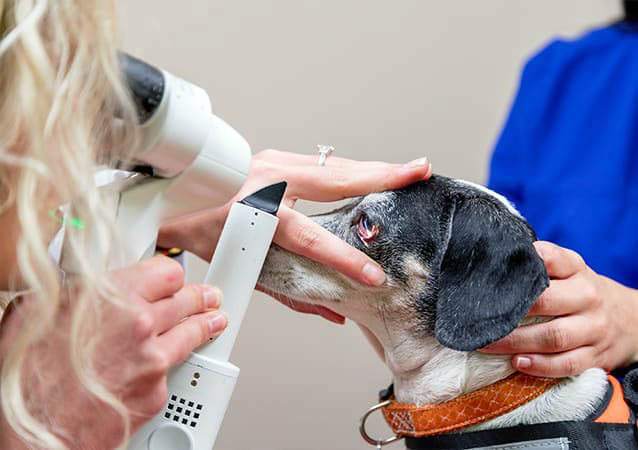
A Veterinary Ophthalmologist is a vet specialist who treats eye diseased in animals. They treat and diagnose diseases that affect the cornea, treating cataracts, traumatic eye injuries, conjunctivitis, and glaucoma. They also carry out surgery to treat specific eye conditions. Moreover, they also perform routine eye examinations on animals.

The veterinary ophthalmologist field is one of the most demanding fields in the vet world. This is because one requires 12 years of university education to become certified to practice. First, one has to get a first degree and then proceed to get a degree in veterinary medicine for another four years. Afterward, one has to study four more years to learn about animal eye disease diagnosis and treatment.

After that, one has to undertake a one-year internship and a residency of three years, typically in a clinic or a teaching hospital. The next step is to pass a board exam to be certified to practice. After passing, the specialist is issued with an ophthalmology diplomate. The body that issues the exam is known as the American College of Veterinary Ophthalmologists. The exam takes about four days, and it tests practical elements like surgery as well as a written exam. Veterinary Ophthalmologists can specialize in treating various categories of animals or one animal species.

Veterinary Ophthalmologist Salary

Luckily, despite the many years of education needed, this field pays very well for those patient enough. The average starting salary of a veterinary ophthalmologist is about $85,500. However, the dollars start piling up very quickly, earning veterinary ophthalmologists an average annual salary of $215,500.

However, it should be noted that the education required for this field is extremely expensive. Due to the high barriers of entry in this field, Veterinary Ophthalmologists are few and are highly demanded. The job growth for the field is also on an upward trajectory for the next ten decades. Thus job security is very high. Thanks to their rarity, Veterinary Ophthalmologists can command high remuneration, as seen above.

Working hours for a Veterinary Ophthalmologist are typically about 8 hours daily, totaling 40 hours per week. However, one can be on-call in case of emergencies beyond their working hours.

Veterinary Salary by State.

According to various bodies like the U.S. Bureau of Labor Statistics and the American Veterinary Medical Association, the following are the average annual salaries in the 50 states of the U.S.

STATE HOURLY RATE AVG ANNUAL SALARY
Alabama $42.32 $88,040
Alaska $52.98 $111,050
Arizona $49.03 $102,002
Arkansas $34.02 $70,040
California $58.00 $120,900
Colorado $41.05 $86,010
Connecticut $53.90 $113,900
Delaware $52.01 $107,015
District of Columbia $59.50 $124,998
Florida $50.20 $101,020
Georgia $45.15 $90,200
Hawaii $95.02 $199,200
Idaho $41.98 $89,100
Illinois $48.02 $98,010
Indiana $44.40 $90,000
Iowa $41.01 $85,010
Kansas $41.00 $85,250
Kentucky $43.98 $91,990
Louisiana $40.20 $85,240
Maine $46.60 $96,900
Maryland $51.50 $106,800
Massachusetts $51.98 $108,100
Michigan $43.60 $90,580
Minnesota $44.50 $92,078
Mississippi $37.50 $76,540
Missouri $47.60 $98,004
Montana $36.59 $75,890
Nebraska $36.50 $75,100
Nevada $59.10 $121,800
New Hampshire $51.90 $105,900
New Jersey $61.50 $124,500
New Mexico $51.90 $105,900
New York $59.10 $123,100
North Carolina $52.50 $106,950
North Dakota $47.90 $98,000
Ohio $49.20 $99,000
Oklahoma $41.50 $83,500
Oregon $45.90 $91,700
Pennsylvania $53.20 $108,600
Rhode Island $58.90 $119,300
South Carolina $51.50 $104,990
South Dakota $40.99 $87,900
Tennessee $42.20 $88,400
Texas $53.00 $110,020
Utah $38.08 $79,800
Vermont $50.00 $104,010
Virginia $54.05 $112,000
Washington $45.50 $92,900
West Virginia $45.00 $92,900
Wisconsin $42.56 $89,000
Wyoming $41.05 $85,300