The Incredible Dr. Pol cast: Where are they now in 2026? Latest update.

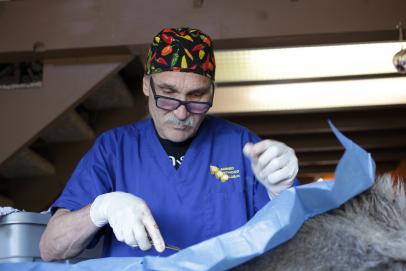
In 2026, Dr. Pol’s public life is no longer centered on new episodes of The Incredible Dr. Pol—it’s centered on keeping the “Dr. Pol” mission alive in two lanes: real-world animal care and a growing pet-care brand. He’s still publicly positioned as a hands-on rural veterinarian, but the bigger shift is how his decades of TV trust are being used to reach pet owners beyond Michigan. That shows up in Dr. Pol–branded pet products (including newer food lines) and in Dr. Pol CARE, a subscription telehealth-style service marketed around 24/7 access to licensed veterinarians for guidance when a local clinic isn’t immediately available.

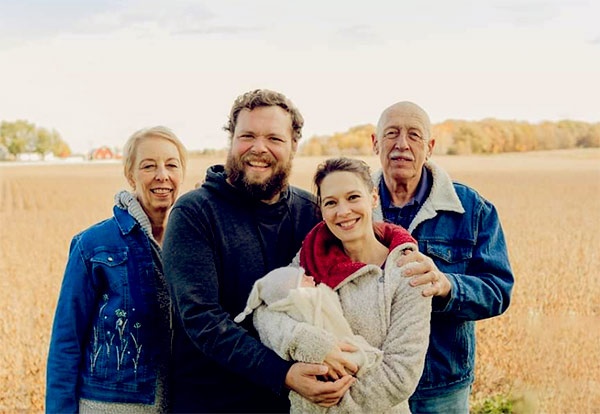
Charles Pol is operating as the franchise builder and business driver in 2026. While he remains a familiar on-screen face, his main role today is steering the broader Dr. Pol ecosystem—especially the consumer side—through Docson Brands, where he’s publicly identified as the CEO. He’s also a key creative force behind the post–Incredible Dr. Pol era of storytelling, helping keep the family’s world on TV while the original series is over.

The new show: The Incredible Pol Farm

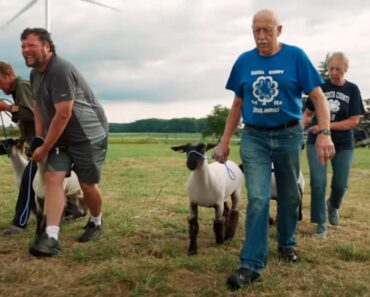
A major part of what they’re doing now is The Incredible Pol Farm, which launched in early 2024 on Nat Geo WILD and follows the Pol family taking on an ambitious new chapter: building a working family farm on roughly 350 acres. The series shifts the spotlight from the clinic’s daily emergency pace to long-term family legacy—land, livestock, equipment, and the hard realities of turning raw property into something sustainable.

In 2026, the farm show functions as the clearest continuation of the Pol brand on television, with Dr. Pol and Charles still at the center—Dr. Pol as the steady patriarch presence, and Charles as both on-screen leader and behind-the-scenes architect pushing the franchise forward.

Where is Dr. Nicole Arcy now?

Dr. Nicole Arcy, DVM, MPH is a Michigan-raised veterinarian who became a familiar face to viewers through The Incredible Dr. Pol, where she was introduced as the clinic’s “new doc” on-screen by 2019 and quickly stood out for her calm, compassionate approach with both farm animals and pets.

After giving birth and becoming a proud new mom to her son, Noah, she appears to have stepped back from her regular role at Pol Veterinary Services and the day-to-day filming pace that came with it, choosing a path that better fit her new season of life.

Today, she is based in Michigan and is working in clinical practice at Clare Animal Hospital, PC, where she’s publicly listed as part of the professional community connected to that hospital and continues serving local clients as a practicing veterinarian.

What happened to Dr. Lisa Jones DVM from “The Incredible Dr. Pol”? Where is she now?

Dr. Emily Thomas is a veterinarian best known to viewers as one of the standout doctors on The Incredible Dr. Pol, praised for her steady, capable style on tough farm calls and everyday clinic cases.

After her run on the series, she left Dr. Pol’s practice in 2019 and relocated with her family to Virginia, where she continued practicing in a role that offered more flexibility. Since then, she’s made another major life change: she has moved to Colorado, and she is now working as an Associate Veterinarian at Laurel Veterinary Clinic in Broomfield, Colorado, where the clinic’s official team bio notes her training at the University of Georgia, prior practice experience across South Carolina, Michigan, and Virginia, and her move to Colorado to be closer to family

What Happened to Dr. Brenda on Dr. Pol? Is She still with Dr. Pol?

Dr. Brenda Grettenberger is one of the most familiar faces from The Incredible Dr. Pol—a steady, deeply experienced veterinarian who became known for her calm, compassionate style and her willingness to handle the gritty “country vet” reality without hesitation. She’s long been regarded as a senior member of the team at Pol Veterinary Services in rural Michigan, and multiple show descriptions note that she has worked alongside Dr. Pol since 1992, making her one of the clinic’s longest-tenured vets.

In recent years, Brenda’s name has also surfaced in a very real kind of “legal trouble,” but it wasn’t tabloid drama—it was a professional licensing matter. A Michigan licensing case tied to a dog (Macy) that died after a teeth cleaning led to an administrative complaint alleging improper supervision and related violations; the matter went through hearings and disciplinary action at the administrative level.

However, in a decision dated December 16, 2025, the Michigan Court of Appeals reversed the finding that she violated the Public Health Code and remanded the case for dismissal, largely because the court found the key standard-of-care conclusion wasn’t supported by admissible expert testimony (while also noting it was not declaring her conduct met the standard of care—only that the violation finding wasn’t properly supported on the record).

As for where she is now: the most consistent public messaging from the Dr. Pol team is that she is still working with Dr. Pol, but she has kept a lower on-camera profile so she can stay focused on caring for animals rather than filming—meaning she remains part of the clinic world even if viewers don’t see her as often as before.

Dr. Ray Harp from Dr. Pol. Where is he now?

Dr. Ray Harp—the calm, soft-spoken vet who became a familiar face on The Incredible Dr. Pol—is no longer with Pol Veterinary Services and hasn’t been part of the show for some time. In a fan Q&A, executive producer Charles Pol said Dr. Ray left the clinic for family reasons and “moved on,” and the same reporting notes that Harp has since relocated to Colorado.

As for what he’s doing now, the most consistent, direct “current” clue is from Harp himself: his public Instagram bio describes him as a “Dad and Veterinarian in Colorado” and adds that he doesn’t work at Dr. Pol’s clinic anymore. He appears to be continuing his career in clinical veterinary medicine in Colorado, but he hasn’t publicly and consistently listed a specific clinic or job title in the sources that are easy to verify—so it’s safest to say he’s practicing as a veterinarian in Colorado while keeping the details relatively private.

Dr. Nicole Arcy Vet.

Dr. Nicole Arcy, DVM, MPH is a Michigan veterinarian best known to many viewers from The Incredible Dr. Pol, where she joined Pol Veterinary Services as a new doctor and became part of the show’s on-screen clinic team. According to her clinic bio, she graduated from the University of Missouri in 2018, earning both her Doctor of Veterinary Medicine (DVM) and a Master of Public Health (MPH), and she’s built her career around hands-on, mixed-animal care. On her public profiles, she often shares the day-to-day reality of veterinary life and her passion for helping animals, which is a big part of why fans connect with her work.

Dr. Jeff Young, Battling Stage 4 Cancer, Reveals the Cause He Refuses to Stop Fighting For

In the interview, Dr. Jeff didn’t just describe what he believes is broken — he laid out several forces he says are pushing pet care into crisis, and he repeatedly returned to one idea: this can be fixed, but only if the system stops pretending it’s normal.

Here are the five biggest “truths” he highlighted.


1) Pets are dying because care is becoming unaffordable

Dr. Jeff’s biggest concern is what happens when treatment becomes a luxury item. When an animal’s survival depends on whether an owner can cover a massive estimate, he argues, the system is no longer centered on care.

Instead, it becomes a financial test — and not everyone passes.

His solution: Dr. Jeff believes communities need full-service, low-cost veterinary hospitals — not just limited programs, not just pop-up services — so families have real options before they reach the point of euthanasia.


2) Some communities have become “pet-care deserts”

Dr. Jeff compares the crisis to food deserts — areas where basic needs aren’t accessible. In his view, there are places where pets rarely see a veterinarian, rarely receive preventive care, and often never get spayed or neutered.

He believes those gaps don’t just create more suffering — they fuel a cycle of overpopulation, shelter strain, and medical emergencies that could have been prevented.

His solution: He argues for low-cost hospitals plus mobile clinics, with prevention as the backbone: spay/neuter, vaccines, and early treatment instead of last-minute crisis care.


3) He says large national humane groups should be doing more

Dr. Jeff doesn’t hold back when discussing what he sees as missed opportunities in animal welfare. In the interview, he criticizes major national humane organizations for not using their resources to build the kind of infrastructure he believes would change everything: nonprofit hospitals that offer real medical care, not just limited services.

He also suggests donors should be more demanding — not just moved by emotional campaigns, but focused on measurable results.

His solution: He says big organizations should invest in full-service nonprofit hospitals that can provide surgery and ongoing care — and use their influence to expand access and reduce costs in underserved areas.


4) Corporate consolidation is driving up costs — and wearing vets down

Dr. Jeff also raises concerns about corporate consolidation in veterinary medicine. He argues that when corporate groups run clinics, costs can climb due to overhead and business priorities, leaving many families priced out.

He also ties this to a deeper issue that rarely gets discussed publicly: the emotional toll on veterinarians. In his view, many vets never imagined they’d spend their careers euthanizing treatable animals because people can’t pay — and he believes that moral weight contributes to burnout and mental-health struggles in the field.

His solution: He argues for a stronger nonprofit hospital network that offers fair wages, proper tools, and a way for veterinarians to practice medicine without constantly facing “pay or goodbye” decisions.


5) He says shelters need reform — and challenges the “No Kill” label

Another point that may surprise some animal lovers: Dr. Jeff says he doesn’t use the term “No Kill,” and suggests it has created serious issues in the shelter world.

His argument isn’t against saving lives. Instead, he believes the phrase can become a label that hides deeper problems — like overcrowding, delays in medical treatment, and weak follow-through systems.

He stresses that shelters should be closely tied to full-service medical care and that animals should be treated quickly and responsibly.

His solution: Dr. Jeff says shelters should be connected to full-service hospitals, and he calls for stronger standards — including ensuring animals are spayed/neutered before adoption and improving staffing, training, and public education.


A Personal Moment: Dr. Jeff Says He’s Facing Stage 4 Cancer

The interview also includes a deeply personal note: Dr. Jeff says he is facing Stage 4 cancer, but remains hopeful and says his body is responding to treatment.

Even so, he frames his work with urgency. He says he wants to build a system that can outlive him — a facility and mission that remains financially secure and capable of helping pets long into the future.

It’s one of the most striking parts of the conversation: a man talking about the future of animal care while battling for his own health — still pushing forward, still trying to leave something behind.

What Dr. Jeff Says People Can Do Right Now

Dr. Jeff doesn’t suggest change only belongs to lawmakers or massive donors. He encourages everyday people to:

  • support grassroots clinics and rescue groups

  • sponsor surgeries when possible

  • ask questions about where donations go

  • volunteer locally and help educate others

  • push for prevention programs like spay/neuter and vaccines

  • speak up when communities have no affordable care options

In short, he believes small actions matter — and that silence is part of how the crisis continues.

The takeaway

For Dr. Jeff, this is not a story about one sick pet or one struggling family. It’s a warning about a system that, he argues, is slowly turning love into a luxury.

And if his biggest message could be boiled down to one line, it’s this:

We don’t need more excuses. We need more access.

Dr. Pol gets Emotional Remembering losing his father to …

Dr. Jan Pol, a name synonymous with compassion, veterinary medicine, and family values, has become a beloved figure through his show The Incredible Dr. Pol, which has captivated audiences for over a decade. His straightforward, no-nonsense approach to animal care, coupled with his warm demeanor, has made him a household name. Yet, beyond his professional success lies a deeply personal story, one marked by love, loss, and resilience, particularly with his wife Diane, whose support through life’s toughest moments has been as steadfast as it is inspiring.

The Man Behind the Legacy: Dr. Jan Pol

Born and raised in the Netherlands, Dr. Jan Pol’s journey into veterinary medicine began early in life. Growing up on a farm, Pol developed a deep affection for animals, which ultimately led him to pursue veterinary science. After completing his education in the Netherlands, he seized an opportunity to participate in an exchange program in Michigan, setting the stage for a monumental change in both his career and personal life.

In the summer of 1961, at the Detroit airport, Pol encountered the woman who would later become his wife, Diane. Their love story, much like Dr. Pol’s career, developed organically and over time. As Dr. Pol often recounts, his first impression of Diane was somewhat surprising. “I saw her standing there and thought, ‘My gosh, she’s tall!’” he reminisces with a smile. Despite the humorous initial observation, it wasn’t love at first sight. In fact, it took several months of friendship, growth, and shared experiences before their bond began to deepen.

A Love Grown Slowly, Yet Strongly

Diane recalls the moment she first realized her feelings for Jan. “He asked one of my friends out for a Christmas party, and I thought, huh. There was just something happening then.” It wasn’t a dramatic or immediate revelation, but rather a gradual awareness that this man, who had come from a distant country, was becoming someone very important in her life. During the time that Jan spent in Michigan as an exchange student, the two built the foundation of what would become a lifelong partnership.

After the exchange program ended, Jan returned to the Netherlands while Diane continued her studies in Michigan. However, their connection only grew stronger. Letters, written with the care and patience that defined their relationship, became their primary means of communication. “We wrote once a month,” Diane shared. These letters kept their bond alive, and eventually, their relationship blossomed into something more profound.

A Relationship Tested by Distance and Tragedy

The couple’s relationship faced an early test, not just from the physical distance between Michigan and the Netherlands, but also from a deeply personal tragedy that would soon unfold. After just two years back in the Netherlands, Dr. Pol’s father was diagnosed with bone cancer. It was an emotionally challenging time for Jan, who was still very much connected to his family despite the distance. His parents had visited him during his time in Michigan, which further strengthened their bond with Diane.

The diagnosis of Jan’s father hit hard. As Jan wrote to Diane about the illness, it became clear to her that the man she had grown to love was in need of support. Demonstrating the selflessness and loyalty that has defined her throughout their relationship, Diane made the decision to travel to the Netherlands in 1964 to help Jan and his family through this difficult period.

A Defining Moment in Their Love Story

In the Pol family home, Diane quietly took on the role of caregiver. She helped with the cooking, cleaning, and all the necessary duties as Jan and his family focused on his father’s care. Diane’s quiet strength during this time had a profound impact on Jan. “You know that you can depend on each other,” he said of this time, reflecting on how their relationship solidified through shared adversity.

After this period, Jan and Diane’s relationship took on a new depth. They began writing to each other more frequently—once a week—exchanging not just letters, but their hopes, fears, and dreams for the future. These letters were a lifeline that kept their bond alive through the years of separation.

A Tragic Loss: Dr. Pol’s Father Passes Away

The couple’s shared experience in caring for Jan’s father would leave an indelible mark on their relationship. The experience of witnessing his father’s slow decline, as well as the emotional and physical toll that cancer had on him, was deeply painful for Jan. Yet, it was also in this moment that Jan recognized Diane as his partner in every sense of the word.

Despite their efforts and the unwavering care provided by both Jan and Diane, Dr. Pol’s father ultimately passed away from cancer in 1964. His passing, though tragic, was a turning point in Jan’s life. Not only did it teach him about the importance of family and caregiving, but it also cemented the foundation of his relationship with Diane.

Through this period of grief, the couple emerged stronger. They had faced one of life’s most difficult challenges together, and in doing so, they learned that they could depend on each other in any circumstance. After Jan’s father passed away, he and Diane continued to grow closer, eventually leading to their marriage—a union built on love, mutual respect, and shared values.

The Pol Legacy: Love, Family, and Resilience

Fast forward to today, and the Pol family continues to share their journey with millions of viewers through their long-running National Geographic series, The Incredible Dr. Pol. Fans of the show have witnessed not only Dr. Pol’s remarkable skills as a veterinarian but also the deep bond he shares with his wife Diane, their son Charles, and their extended family.

In addition to their show, the Pol family has expanded their ventures into The Incredible Pol Farm and launched their podcast, Incredi-Pol Cast. Whether it’s through their love of animals, their dedication to their family, or their openness with fans, the Pols have shown that love—whether romantic, familial, or communal—can truly conquer all.

Ahead of Valentine’s Day, Dr. Pol, Diane, Charles, and Beth reflect on the various forms of love that have carried them through the years. For Dr. Pol, his father’s battle with cancer, the role Diane played during that difficult time, and the love they built together during it all are constants in his heart. This love continues to be at the core of the Pol family—one of strength, resilience, and unwavering support, no matter what life throws their way.

As Diane quietly tended to his family during one of the darkest times in his life, Dr. Pol realized the true depth of their connection. Through life’s challenges, including the tragic passing of his father from bone cancer, their love has only grown stronger, becoming a beacon of hope and resilience for all those who follow their story.

Veterinarian Annual Salary: Veterinary Assistant, Technician Salary.

The veterinary field is one that focuses on giving a medical diagnosis, treatment, and care to sick animals. A veterinarian is an animal doctor who performs diagnosis, surgery, and treatment to sick animals. On the other hand, a Veterinary Technician is a trained professional who does complimentary vet work alongside a Veterinarian.

A Veterinary Technician typically takes x-rays, vaccinates, and conduct blood tests. A Veterinary Assistant helps with the preparation of examination rooms, dressing wounds, restraining animals, cleaning medical tools, inoculating animals, and taking animal vital signs. To find out the salaries associated with these noble professions, keep reading our in-depth article.

Who is Veterinarian, aka Veterinary Surgeon?

A Veterinarian, as aforementioned, is the equivalent of a human’s General Practitioner for animals. Typically, a Veterinarian is a highly learned and qualified individual. To become a Veterinarian, one has to undergo many years of formal education.

To get the enviable title of a Veterinarian, one has first to complete a four-year undergraduate course after high school. After getting the first degree, one can then join a Veterinary Medicine program for another four years. This means that a Veterinarian has to have a minimum of eight years of undergraduate education to get a job. Most universities offer the Doctor of Veterinary Medicine degree. The bachelor’s degrees in this field include Bachelor of Veterinary Medicine, Bachelor of Veterinary Science, Bachelor of Veterinary Medicine and Surgery.

After completing the undergraduate program, a Veterinarian can choose to get an internship. Typically, a vet who starts his or her career with an internship earns more than those who choose not to get an internship. This is because internships increase the vet’s experience, which translates to a higher wage.
Veterinary Surgeon salary

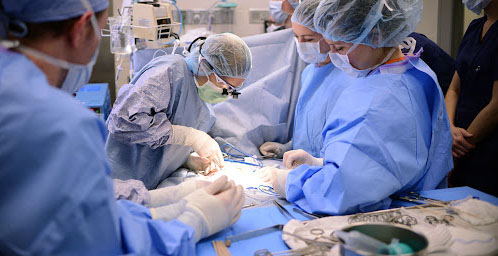
A Veterinary Surgeon usually performs operations on animals to treat conditions associated with hearts, bones, muscles, and the brain. A Veterinary Surgeon can also specialize in fields like oncology surgery, treating wounds and traumatic injuries, or joint surgery. To become a Veterinary Surgeon, one has to complete a degree in Veterinary Medicine and then complete a one-year internship. After that, the vet has to complete a three-year residency in a clinic or animal hospital. After the residency program, one then has to pass a board exam to start practicing.

Veterinarian Salary.

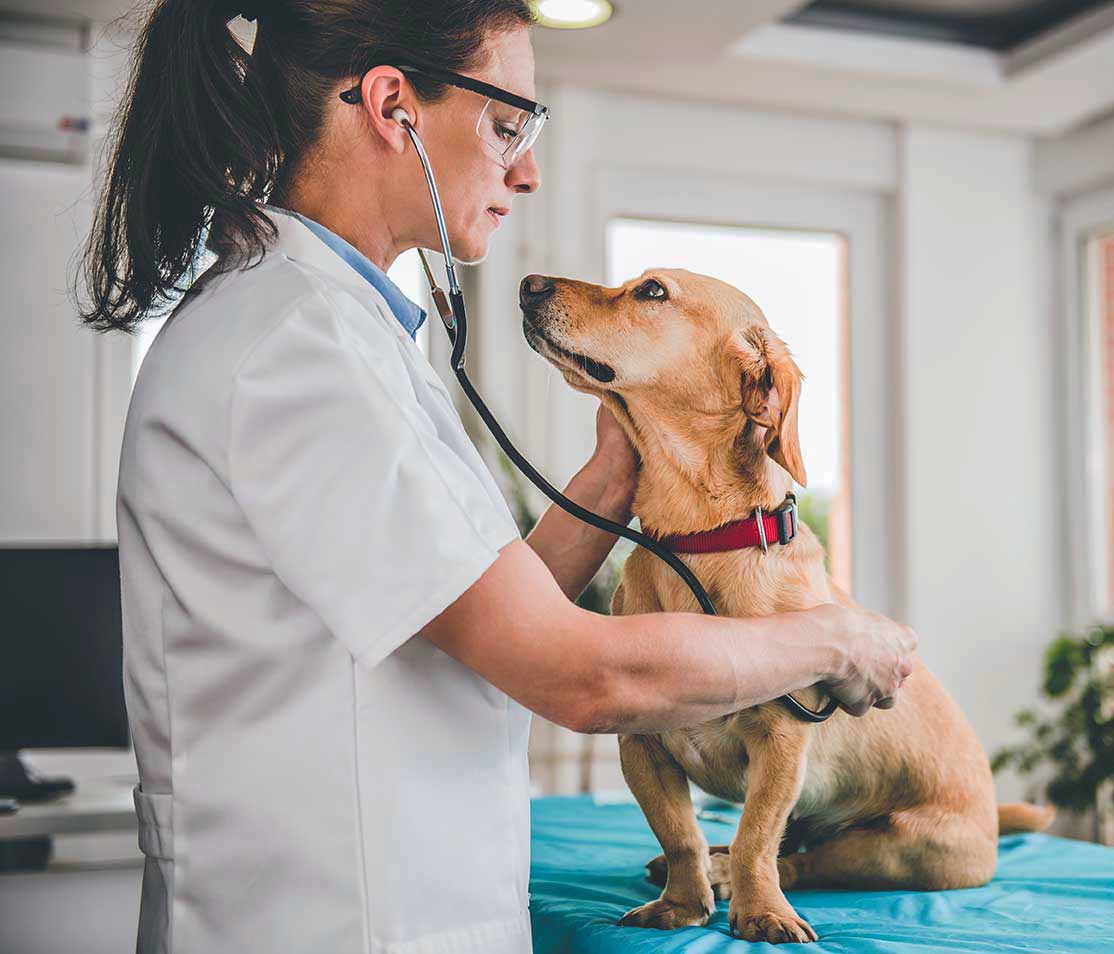
Veterinary Medicine is one of the better-paying professions in the U.S. The average pay of a vet in the U.S. is $90,500. The hourly average paid to vets is about $44. However, the pay differs from state to state and is also based on the level of education, years of experience, the field of specialization, and area of expertise.

The median starting salary for a vet who sees pet animals or companion animals is about $67,200. If a vet works with farm animals like cattle and sheep, the average starting salary is typically higher, about $76,700. A vet who attends only to horses starts out earning $47,800 annually.

A Veterinary Surgeon earns an average of $91,500 in the U.S. The starting salary is usually $44,000. However, it all depends on the state one is practicing in and the specialty of the surgeon. Some Veterinary Surgeons can earn over $160,000 annually. In fact, in the area of Lubbock, Texas, a vet earns an average salary of $228,500. The best paying states for Veterinarians are Virginia, Texas, California, Alaska, and New Jersey. The salary in each state also varies depending on the industry the vet works in. Managerial positions and consulting services are some of the best-paying ones. Typically, vets in these industries can make over $135,000. Scientific research and development pay from $111,000. On the other hand, clinics pay from $120,000.
Veterinary salary

The working hours per week for a vet are 40. However, a vet can be called in to attend to emergencies outside their working hours. However, it all a part of the job as saving lives comes first. The Veterinarian field is projected to continue growing as more than 16,000 new jobs are expected to be open by 2030. This represents a 20 percent growth making the field a highly marketable one. Besides, job security for the field is high.

Veterinary Technician Salary.

Veterinary Technicians give medical care to sick animals through carrying out blood sample testing, taking x-rays of sick animals, feed and clean animals, and administering vaccines. The Veterinary Technician field is easier to join as it doesn’t require many years of study like Veterinary Surgery or Medicine. All one needs is an associate’s degree in Veterinary Technology.

After completing the degree program, one has to pass a state exam to be certified to practice. However, a Veterinary Technologist studies two years more than a Veterinary Technician and is usually awarded a bachelor’s degree. The field is expected to continue growing in the next 10 years as more people get pets. So if you were contemplating joining the field, you can’t go wrong.

The average salary of a Veterinary Technician is about $31,000. On the other hand, a Veterinary Technologist’s average salary is about $38,500. Veterinary Technicians working in Universities, schools, and colleges earn higher than those who work in animal clinics. The former earn an average salary ranging from $40,000 to $49,000. The starting salary for a veterinary technician is about $27,880. Some of the best paying states for a Veterinary Technician are New York, Washington, Massachusetts, and New Hampshire. In these states, the average salary for Vet Technicians is about $34,000.

Veterinary Assistant Salary.

The Vet Assistant field is one of the easiest and most flexible practices in the veterinary field. Moreover, one doesn’t need an undergraduate certification to become a Veterinary Assistant. A high school diploma is all one needs, and the rest is learned on the job. Moreover, the vet assistant field is more flexible than a vet technician as there are options to work part-time.

Typically, a vet assistant helps a veterinarian around the clinic. They do a range of tasks like cleaning and feeding sick animals, cleaning medical tools, and other clerical tasks that they may be assigned. Due to the nature of their work, vet assistants need to be patient, loving, empathetic and also possess some degree of physical strength to help in restraining animals for procedures. Sick animals are usually distressed, and they could inflict injuries if they feel threatened. Thus, a vet assistant must always take all necessary precautions when handling animals to avoid bites, scratches, dangerous pecking, kicks, and other defense behaviors a sick animal may exhibit.

A vet assistant works in a range of industries such as clinics and animal hospitals, animal rescue centers, laboratories, and in learning institutions like colleges and universities. They work alongside veterinarians and vet technicians. A vet assistant not only helps a veterinarian on duty, but they also assist vet technicians too.

The average yearly salary of a Vet Assistant is $26,140. From this, the hourly rate a Vet Assistant earns is $12.57. However, the earnings of a Vet Assistant also depend on the industry one works with. For example, vet assistants who work in universities and private colleges earn an average of $37,000. Generally, a vet assistant earns less than vet technicians as their jobs are easier and do not require an undergraduate degree, as in the case of vet techs.

The vet assistant field is a marketable one, and there are many opportunities to get a job thanks to an increase in pet ownership. By 2030, it is projected that over 16,000 new vet assistant jobs will be created. As a result, job security in this field is also high.

Veterinary Assistant Salary by State.

STATE AVG HOURLY RATE AVG ANNUAL SALARY
Alabama $13.30 $27,700
Alaska $15.20 $31,700
Arizona $14.10 $29,400
Arkansas $13.40 $27,800
California $15.00 $31,000
Colorado $14.30 $29,700
Connecticut $15.20 $31,900
Delaware $14.30 $29,800
District of Columbia $14.30 $29,700
Florida $12.80 $26,700
Georgia $13.60 $28,300
Hawaii $15.90 $33,000
Idaho $15.20 $31,700
Illinois $13.30 $27,700
Indiana $14.00 $29,200
Iowa $13.80 $28,600
Kansas $14.10 $29,300
Kentucky $14.50 $30,500
Louisiana $13.90 $28,900
Maine $13.90 $29,000
Maryland $15.50 $32,000
Massachusetts $16.50 $34,300
Michigan $13.40 $27,900
Minnesota $14.30 $30,000
Mississippi $13.20 $27,400
Missouri $13.10 $27,300
Montana $15.20 $31,700
Nebraska $15.10 $31,500
Nevada $15.20 $31,700
New Hampshire $16.05 $33,500
New Jersey $14.50 $30,200
New Mexico $13.40 $28,000
New York $16.60 $34,700
North Carolina $12.20 $25,400
North Dakota $15.20 $31,700
Ohio $14.20 $29,500
Oklahoma $14.00 $29,100
Oregon $14.30 $29,800
Pennsylvania $14.40 $30,000
Rhode Island $15.20 $31,500
South Carolina $14.30 $30,000
South Dakota $14.50 $30,500
Tennessee $14.30 $29,700
Texas $13.50 $28,000
Utah $14.10 $29,200
Vermont $15.10 $31,500
Virginia $15.00 $31,000
Washington $16.30 $34,100
West Virginia $14.50 $30,200
Wisconsin $14.20 $29,500
Wyoming $15.20 $31,700

Veterinary Ophthalmologist Salary.

A Veterinary Ophthalmologist is a vet specialist who treats eye diseased in animals. They treat and diagnose diseases that affect the cornea, treating cataracts, traumatic eye injuries, conjunctivitis, and glaucoma. They also carry out surgery to treat specific eye conditions. Moreover, they also perform routine eye examinations on animals.

The veterinary ophthalmologist field is one of the most demanding fields in the vet world. This is because one requires 12 years of university education to become certified to practice. First, one has to get a first degree and then proceed to get a degree in veterinary medicine for another four years. Afterward, one has to study four more years to learn about animal eye disease diagnosis and treatment.

After that, one has to undertake a one-year internship and a residency of three years, typically in a clinic or a teaching hospital. The next step is to pass a board exam to be certified to practice. After passing, the specialist is issued with an ophthalmology diplomate. The body that issues the exam is known as the American College of Veterinary Ophthalmologists. The exam takes about four days, and it tests practical elements like surgery as well as a written exam. Veterinary Ophthalmologists can specialize in treating various categories of animals or one animal species.
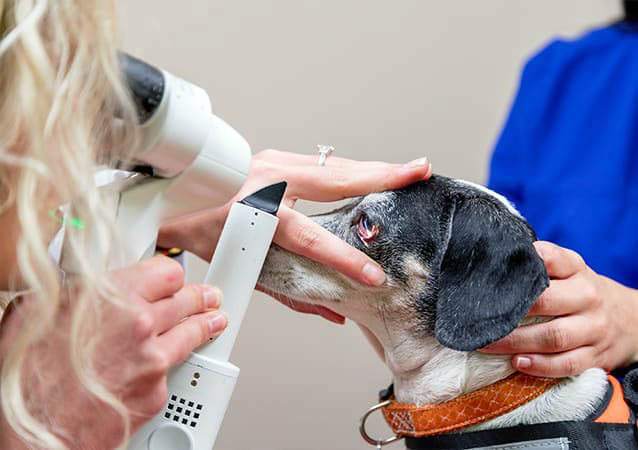
Veterinary Ophthalmologist Salary

Luckily, despite the many years of education needed, this field pays very well for those patient enough. The average starting salary of a veterinary ophthalmologist is about $85,500. However, the dollars start piling up very quickly, earning veterinary ophthalmologists an average annual salary of $215,500.

However, it should be noted that the education required for this field is extremely expensive. Due to the high barriers of entry in this field, Veterinary Ophthalmologists are few and are highly demanded. The job growth for the field is also on an upward trajectory for the next ten decades. Thus job security is very high. Thanks to their rarity, Veterinary Ophthalmologists can command high remuneration, as seen above.

Working hours for a Veterinary Ophthalmologist are typically about 8 hours daily, totaling 40 hours per week. However, one can be on-call in case of emergencies beyond their working hours.

Veterinary Salary by State.

According to various bodies like the U.S. Bureau of Labor Statistics and the American Veterinary Medical Association, the following are the average annual salaries in the 50 states of the U.S.

STATE HOURLY RATE AVG ANNUAL SALARY
Alabama $42.32 $88,040
Alaska $52.98 $111,050
Arizona $49.03 $102,002
Arkansas $34.02 $70,040
California $58.00 $120,900
Colorado $41.05 $86,010
Connecticut $53.90 $113,900
Delaware $52.01 $107,015
District of Columbia $59.50 $124,998
Florida $50.20 $101,020
Georgia $45.15 $90,200
Hawaii $95.02 $199,200
Idaho $41.98 $89,100
Illinois $48.02 $98,010
Indiana $44.40 $90,000
Iowa $41.01 $85,010
Kansas $41.00 $85,250
Kentucky $43.98 $91,990
Louisiana $40.20 $85,240
Maine $46.60 $96,900
Maryland $51.50 $106,800
Massachusetts $51.98 $108,100
Michigan $43.60 $90,580
Minnesota $44.50 $92,078
Mississippi $37.50 $76,540
Missouri $47.60 $98,004
Montana $36.59 $75,890
Nebraska $36.50 $75,100
Nevada $59.10 $121,800
New Hampshire $51.90 $105,900
New Jersey $61.50 $124,500
New Mexico $51.90 $105,900
New York $59.10 $123,100
North Carolina $52.50 $106,950
North Dakota $47.90 $98,000
Ohio $49.20 $99,000
Oklahoma $41.50 $83,500
Oregon $45.90 $91,700
Pennsylvania $53.20 $108,600
Rhode Island $58.90 $119,300
South Carolina $51.50 $104,990
South Dakota $40.99 $87,900
Tennessee $42.20 $88,400
Texas $53.00 $110,020
Utah $38.08 $79,800
Vermont $50.00 $104,010
Virginia $54.05 $112,000
Washington $45.50 $92,900
West Virginia $45.00 $92,900
Wisconsin $42.56 $89,000
Wyoming $41.05 $85,300

Dr. Brenda Grettenberger’s Legal Drama Just Ended — The Court’s Decision Is Finally In

Dr. Brenda Grettenberger, D.V.M., is one of the most familiar and respected faces connected to The Incredible Dr. Pol. Longtime viewers know her as the calm, steady veterinarian who can handle everything from intense farm emergencies to routine clinic care without turning it into a show. While Dr. Jan Pol may be the headline name, Dr. Brenda became a big part of what made the series feel real—because she never came across like someone performing for the camera. She came across like a vet doing the job.

Dr. Brenda was born and raised in Michigan, and her love for animals started early. Growing up around farm life helped shape the path she’d eventually choose, especially when it came to working with large animals and rural clients who depend on practical, no-nonsense care. After finishing school, she pursued veterinary medicine and earned her D.V.M. from Michigan State University, one of the most well-known veterinary programs in the country.

Not long after graduating, Dr. Brenda joined Pol Veterinary Services and built a reputation for being reliable, capable, and fiercely dedicated to her patients. When the TV cameras later arrived, she didn’t feel like a “new addition” for entertainment value—she already belonged there. Her early appearances quickly made her a fan favorite. Viewers appreciated her steady energy, her confidence with difficult cases, and the way she handled tense situations without drama.

Over time, though, fans began noticing something: Dr. Brenda wasn’t showing up as often. Episodes would pass without her being featured, and that gap led to the same question popping up again and again—had she left the clinic? Online chatter grew, and rumors started spreading, especially among casual viewers who assumed fewer scenes meant she was gone.

But according to Dr. Pol, the truth was much simpler. Dr. Brenda hadn’t left at all. She was still doing the work—just choosing to appear less on camera. The reason wasn’t conflict or a sudden exit, but a personal preference. She wanted to focus on caring for animals without the constant presence of filming, and reducing her on-screen time allowed her to do that.

In other words, Dr. Brenda didn’t disappear from the clinic—she just stepped back from the spotlight. And for many fans, that choice only reinforced what they liked about her in the first place: she’s always been about the animals first, not the attention.

Dr. Brenda’s Lawsuit that kept her on probation since 2024.

Dr. Brenda Grettenberger — the calm, steady “Dr. Brenda” that The Incredible Dr. Pol fans have watched handling everything from farm calls to clinic emergencies — found herself at the center of a professional licensing case that’s been widely misunderstood online. The short version: a routine dental cleaning for a dog ended in tragedy, regulators alleged she failed to properly supervise the procedure, and the case ultimately swung on one key legal issue — whether the state had the right kind of expert evidence to prove she violated Michigan’s professional standards. Justia Law

The incident that started it all (March 13, 2017)

According to the court record, on March 13, 2017, a dog named Macy was brought to Pol Veterinary Services for a teeth cleaning. Dr. Grettenberger examined Macy beforehand, didn’t find a reason to cancel the procedure, and told a licensed veterinary technician, Andrea Mata, to proceed. Shortly after, Dr. Grettenberger left the clinic for a scheduled “herd health” farm call.

Mata performed the dental cleaning while another veterinarian was still at the clinic. Afterward, Macy initially recovered from anesthesia without issue — but once alert, Macy developed breathing trouble. Another veterinarian at the clinic treated Macy for several hours, but Macy ultimately stopped breathing and died. The cause of death was listed as unknown in the court’s summary of events.

What regulators alleged

After Macy’s death, Michigan’s Bureau of Professional Licensing filed an administrative complaint. The complaint alleged Dr. Grettenberger:

  • failed to adequately examine Macy,

  • did not properly chart Macy’s medical information, and

  • failed to properly supervise the teeth cleaning after delegating it to the technician.

The matter went to a five-day hearing, with both sides presenting expert testimony about the veterinary standard of care.

The ALJ’s key finding: “handoff” supervision

The administrative law judge (ALJ) did not find enough evidence to conclude Dr. Grettenberger’s exam or charting was inadequate. Instead, the ALJ focused on supervision: the idea that once Dr. Grettenberger delegated the cleaning, she left without first “handing off” supervision to another veterinarian through communication and agreement.

The ALJ described handoff as something intentional — not automatic — and reasoned that Dr. Grettenberger didn’t speak to the other veterinarians or obtain a promise that one of them would monitor the procedure before she left.

A procedural twist followed: Dr. Grettenberger moved to disqualify the Bureau’s expert; the disciplinary subcommittee ultimately granted that disqualification — but in the same order, it also adopted the ALJ’s proposal for decision and the finding that she violated the Public Health Code.

The discipline and probation: when it took effect

State disciplinary reports list Dr. Grettenberger (license 6901007301) under Veterinary Medicine with an effective date of May 16, 2024, showing the action as Probation, with the stated basis including incompetence/negligence/technical violation of Michigan’s Public Health Code. Michigan.gov

Important limitation: the disciplinary action report confirms probation and its effective date, but it does not publicly spell out the probation’s detailed terms or a specific “completion” date in the report itself. Michigan.gov

The appeal outcome: the case gets reversed (December 16, 2025)

Dr. Grettenberger appealed — and on December 16, 2025, the Michigan Court of Appeals reversed the violation finding.

The court’s reasoning was blunt: this wasn’t something an ordinary person could decide using “common sense” alone. To discipline a veterinarian for a supervision standard like this, the state needed admissible expert testimony establishing the standard of care and showing it was breached — and the court found that competent evidence wasn’t there.

So the court reversed the portion of the order finding her responsible for violating the Public Health Code and remanded the case for entry of dismissal of the complaint.

Brenda

When was the probation “lifted”?

Here’s the cleanest, evidence-based way to frame it from the official record:

  • Probation took effect: May 16, 2024 (listed effective date). Michigan.gov

  • The discipline underpinning it was overturned: December 16, 2025, when the Court of Appeals reversed the violation finding and ordered the complaint dismissed on remand.

    Brenda

    Brenda

Public-facing reports don’t clearly show the administrative “update date” when probation was formally removed from the license profile (that typically requires the underlying dismissal/order paperwork to be posted in the licensing system). But legally, the December 16, 2025 decision is the turning point that sets the violation finding aside and directs dismissal, which is what ends the basis for the probation in this case.

Brenda

If you want, paste the exact paragraph you used in your earlier draft about “probation lifted on X date,” and I’ll tighten it so it’s 100% wording-safe and matches what the record supports—without weakening the drama/People-style flow.