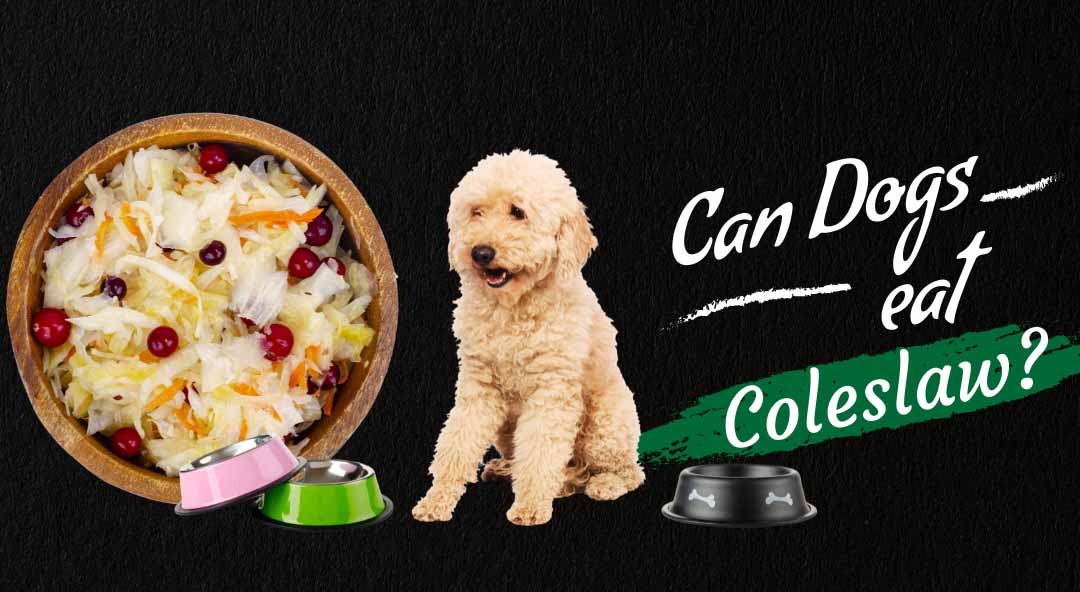
Can Dogs Eat Coleslaw? Everything You Should Know

Unlike humans, dogs do not need variety in their food. Dogs should constantly be fed with nutritious pet feed in a balanced proportion. However, as a dog owner, it is obvious to share your meals and offer human food with your furry friend as a treat occasionally.

While many people’s food is safe for dogs to consume, some are highly vulnerable and even fatal if consumed. Before you let your dog consume human food, make sure you know what’s healthy for him and what will make your buddy unwell.

This article will guide you through feeding your dog with one of the human food, Coleslaw. So, let’s dive into its main components and discover if dogs can eat coleslaw or not.

Can Dogs Eat Coleslaw?

Sadly, it’s a no. Although it is not harmful if your dog consumes it accidentally, you should not feed it frequently on purpose. It does not supply any nutritional value to your canine companion.

Besides, it can also lead your dog to suffer from gastrointestinal upset and other serious health issues.

What is Coleslaw?

Coleslaw comes from the Dutch word koolsla, meaning ‘cabbage salad.’ It is alternatively known as cole slaw or just slaw.

Basically, it is a salad consisting of raw cabbage and other vegetables with a condiment, either mayonnaise or vinaigrette. People also use buttermilk and mustard as a substitute for mayonnaise.

Coleslaw is believed to be consumed in its most basic form since the mid-eighteenth century. In recent years, it has been served worldwide with different variations in the recipe.

Image of Coleslaw.
Coleslaw

In the United States, it often goes along with hamburgers, hot dogs, and sandwiches. Similarly, it is served as a side dish with pizza in Sweden and cooked with chopped pepper and ham in Italy.

It is also majorly consumed in other parts of the world like Germany, Poland, Russia, the United Kingdom, etc.

Why is Coleslaw bad for dogs?

Well, it’s the ingredients that make the whole dish inappropriate for dogs.

The primary components of coleslaw are cabbage and mayonnaise. A small amount of cabbage is ok for dogs, but excess cabbage can cause serious stomach problems for your furry friends. Likewise, mayonnaise is rich in fat content. Excess intake of mayonnaise can increase the risk of pancreatitis and diabetes in dogs.

In addition, other elements of coleslaw unfavorable for dogs are:-

  • Onions
  • Salt
  • Sugar
  • Cream
  • Unnatural preservatives

Health Problems caused by Coleslaw

In general, consuming a small amount of coleslaw is not harmful to your dog. However, if you actively feed it, it can make your canine companion sick.

Below are the severe health complications caused by the intake of coleslaw:-

  • Problems of indigestion caused by cabbage
  • Anemia due to intake of onion
  • Excess salt can cause dehydration and high blood pressure
  • Sugar causes cavities, obesity, and diabetics
  • Diarrhea and vomiting due to indigestion

Best Alternative to Coleslaw

In place of coleslaw, there are various alternatives that your dog can consume safely. Dogs can have salad, but it should contain the ingredient safe for the dogs.

Some of the healthy fruits and vegetables to make a healthy salad for your fur baby are:-

  • Apples: provides fiber and fewer calories
  • Bananas: an excellent source of potassium
  • Blueberries: rich in antioxidants
  • Cucumber: very low calorie and a high source of water
  • Carrots: low-calories snack
  • Watermelons: supplies vitamins and potassium

Image of dog eating banana
Dog eating banana

Apart from fruits and vegetables, you can incorporate boiled eggs and chicken into the salad. These foods are healthy and do not contain any elements dangerous to your dog’s health. The best way is to feed a moderate amount to avoid the risk of gastrointestinal issues.

Conclusion

To conclude, coleslaw is a dish with many possible hazards to your dog’s overall wellbeing. As a conscious pet owner, it is better to remove it from your dog’s diet menu.

Your dog may be likely to have it, but it’s not a good choice as none of the above components are harmless for your furry friend.

We hope you get the necessary guidance on the side effect of coleslaw and decide whether dogs can eat coleslaw or not.


Can Dogs Eat Kimchi? Know Before You Feed Your Dog

Kimchi (known initially as Kimchee) is a popular Korean food. It is primarily made by fermenting cabbage along with other ingredients. However, the recipes can vary from place to place. Kimchi is famous for its unique taste and spice.

If you are a dog owner, you have probably noticed it looking toward you with hope when you are having a warm bowl of Kimchi. So, is it safe to share the dish with your fur friend? This article discusses whether dogs can eat kimchi or not.

Can Dogs Eat Kimchi? Is It Safe?

Fermented eatables are popular among humans and carry many health benefits. However, dogs are biologically different and have varying compatibility.

In the initial process of fermentation of cabbage, a lot of salt is added. Dogs have a greater sensitivity towards salt than humans. Thus, they can get salt poisoning pretty fast.

However, if Kimchi is consumed in a moderate amount, the salt is not present in a high enough amount to cause any harm.

Garlic is a known enemy to dogs and is a major component of Kimchi. But similar to salt, it is also not present in a sufficient amount to cause any harm.

In some sensitive dogs, it may show mild symptoms if the servings are quite large. Other than that, you can freely feed your dog if it’s an occasional thing. Here is a video of small dogs feeding on Kimchi.

Image of Kimchi
Kimchi

What if Your Dog Accidentally Ate a lot of Kimchi?

Due to the salt and garlic content in Kimchi, it can be harmful to your dog if it eats a lot of the fermented food. The first thing that you should do is feed it a lot of freshwaters.

Water is the best salt neutralizer and also serves the purpose of hydration to counter the garlic and salt. As long as your dog does not show severe symptoms, which is rare, you should be fine with just giving it fresh water.

Conclusion

We saw a lot of varying opinions on the internet regarding feeding Kimchi to dogs. However, you can definitely give a taste to your dog in small proportions. Also, make sure not to feed it fermented and spicy foods regularly.

Kimchi is prepared differently in different places. Thus, knowing the individual ingredients used in the food product will help you decide.

We assume you got enough awareness on whether dogs can have Kimchi or not from this article in order to keep your dog safe.

Can Dogs Eat Meatballs? Find Out

Nobody can say no to some juicy meatballs, be it humans or dogs. They are full of nutrition and taste at the same time. However, is it okay to feed your fur friend these non-veg balls?

This article elaborates the conditions on which you can freely let your dog eat meatballs.

Can You Feed Meatballs to Your Dog?

Yes. Dogs can eat meatballs, in essence, meatballs are harmless to them. Some of the ingredients might pose a threat to your fur friend. However, they can be avoided entirely in the recipe.

Today, you can easily find meatballs that are curated explicitly for dogs. And in case you don’t want to go that length, you can also quickly look up recipes to cook dog-friendly meatballs at home. As a rule of thumb, it is better to avoid packaged meatballs as they will contain some ingredients like garlic and onions.

Image of dog staring at meatballs.
Dog staring at meatballs.

What Meatball Ingredients are Safe for Dogs?

Let’s start with the meat. They are tasty, healthy, and nutritious. But you must make sure that the meat does not have spices. Also, always cook the meat properly before moving forward with the recipe. Raw meat can pose health risks to both humans and dogs.

Meat is also vital for the proper growth of your puppy. It aids in bone development, making joints strong, and strengthening nails and coats.

Another safe ingredient is eggs. They provide nutrition and taste. Also, always choose breadcrumbs that have a low content of sugar and salt. The final safe ingredient is cheese. However, cheese is high in fat content and should only be added in a moderate amount.

Which Meatball Ingredients should be Avoided?

Dogs hate the strong spicy taste. They have heightened senses. Thus, anything that can come as a strong taste to humans will have even stronger effects on our paw friends.

Black Pepper, which is a popular meatball ingredient, should be avoided when making meatballs for dogs. Furthermore, it is better to keep the salt content as low as possible.

Garlic, in high amounts, is poisonous to dogs. Thus, it is better to avoid the ingredient altogether. Also, Onions are similar to garlic in their harm to canines. This is because of the presence of the N-Propyl Disulfide compound in both of these vegetables. It severely affects the RBS of dogs and can lead to anemia.

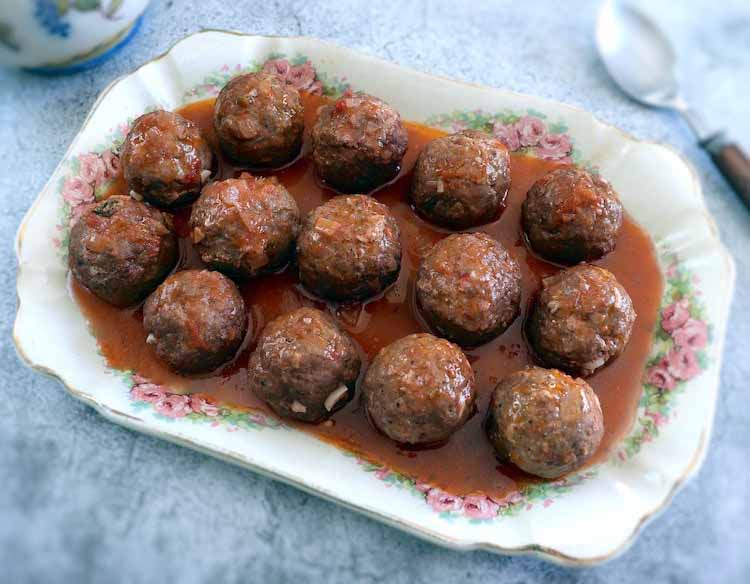
Image of meatballs
Meatballs

Summary Table

Ingredients Safe or not?
Meat Safe. It should be cooked appropriately and without spices.
Breadcrumbs Safe.
Cheese Safe in moderation.
Eggs Safe
Garlic Toxic
Onion Toxic
Salt It may cause salt poisoning. It should be used in a minimal amount.

Conclusion

Meatballs are the perfect food for your dog. However, you must be careful with the ingredients. As long as you are making the recipe on your own or you are purchasing meatballs made for dogs, you have nothing to worry about.

We hope this article provides enough elaboration and answers your question regarding whether dogs can eat meatballs or not.

Can Dogs Eat Sprinkles? Know Before You Feed Your Dog

Sprinkles are popular celebratory sweets mainly due to their colorful nature. They are tasty as well as decorative.

As a pet parent, you might want to include some Sprinkles on your dog’s birthday or even just feed him occasionally as treats. So, is it safe?

This article clarifies if dogs can eat sprinkles. We also endow additional information relating to the treatment and its ingredients. Let’s dig in.

What Are Sprinkles?

Sprinkles are a mixture of sugar, cornstarch, corn syrup, and wax. They also consist of other artificial colorings and flavorings. Many of these ingredients do not sound healthy to feed to your pup. A 100-gram serving of sprinkles can contain up to 75 grams of Carbohydrates.

Can Dogs Eat Sprinkles?

Yes, dogs can definitely eat sprinkles. If you are hosting a birthday party or giving your pup a one-time treat, it is safe to do so. Even if you are giving it occasionally, say three times a week, a small serving of about 4 grams won’t do any harm.

Quality Dog Resources also thinks that most sprinkles are safe inappropriate size servings. However, you must note that they are not healthy.

The primary ingredient in sprinkles is sugar. That is what makes them so tasty and sweet. Sugar is bad for your pup because it can induce many health complexities like diabetes and tooth decay.

Furthermore, it can also disturb the metabolism of your dog. If your pup has a sensitive tummy, a moderate amount of sugar can cause diarrhea.

Image of sprinkles
Rainbow Sprinkles

Another ingredient in sprinkles is corn syrup. All syrups have a high sugar concentration and are thus harmful to your dog in excess servings. There is also cornstarch which can cause digestive problems for your pup.

Moreover, the presence of artificial coloring and flavoring is the most troublesome one. As a rule of thumb, anything artificial poses a certain threat to your dog’s health when served in large amounts.

Some sprinkles have red-40 written in the ingredient for artificial color. You should know that this chemical is derived from petroleum, which is definitely not safe for dogs or humans.

Thus, sprinkles are bad for your dog’s health. However, a small serving should not matter much unless it has an artificial sweetener like xylitol.

Are Chocolate Sprinkles Safe for Dogs?

You should keep your dog away from anything related to chocolate. Generally, chocolate consists of caffeine and theobromine, both of which are harmful to dogs.

The metabolism of dogs isn’t as strong as humans, and thus they cannot metabolize these compounds efficiently like us. This leads to a spike in their stimulus and can cause restlessness.

Chocolates can also be toxic to dogs in large quantities. Your dog might show signs of vomiting and diarrhea if it stole and ate your whole packet of chocolate.

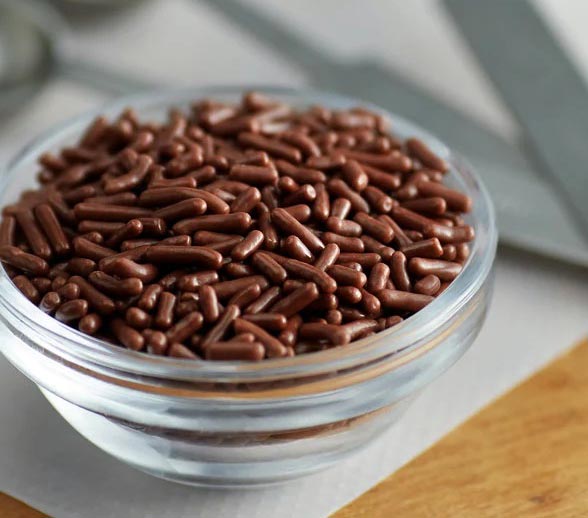
Image of chocolate sprinkles
Chocolate Sprinkles

Are Rainbow Sprinkles Safe for Dogs?

Rainbow means colorful. Dogs are curious animals, and thus this mixture of colors will attract them. If you fail to lock the rainbow sprinkles safely in a locker, the chances are that your dog will invade and bite through the container. By the time you are home, it might be facing some severe stomach problems if it ate a lot of rainbow sprinkles.

Rainbow sprinkles are safe, but only when served in sizes less than 4 grams. If your dog consumes more than 10 grams of these sweets, it may face some tummy issues. If the symptoms are severe, you might consider talking to a vet.

Can Dogs Eat Sugar-Free Sprinkles?

It depends on the type of sweetener used to make the sprinkles sugar-free. Xylitol is one of the chemicals that factories use as sugar alternatives. Basically, xylitol is poisonous to dogs.

Even in small amounts, this chemical can be life-threatening and requires immediate attention if your dog eats some. So, sugar-free sprinkles with xylitol as a sugar alternative should be avoided at all costs.

If the sugar alternative is more plant and natural-based, like honey and stevia, it is safe to treat your dog. Honey is not only tasty but also beneficial for your dog’s health. Stevia is a natural alternative to sugar which isn’t toxic. Thus, you can feed your dog some sugar-free sprinkles if it has natural colorings and sweeteners.

What if Your Dog Ate Sprinkles?

The first thing you should be concerned about is the quantity. If your dog ate less than grams, you could let it be and keep it out of reach to prevent future invasions. However, please monitor your dog closely if the consumed quantity is large (10 grams and above).

In most cases, the dog will experience mild stomach pain and possibly diarrhea. If the dog is too sensitive and the symptoms are severe, you should see medical help immediately.

Summary Table

Items Safe or not?
Sprinkles Yes. But only in small proportions and on occasions.
Chocolate sprinkles Not safe.
Sugar-free sprinkles with Xylitol Poisonous.
Sugar-free with natural sweeteners Safe.
4-gram servings of regular sprinkles Safe.
More than 10-gram servings Not safe.

We assume you got enough insights on whether dogs can have Sprinkles or not from this article in order to keep your dog safe.

Can Dogs Eat Miso? Everything You Should Know

When it comes to fermented food, miso is one of the most popular among them. Fermented foods are always beneficial for the digestive health of both human beings and dogs. But because of the different metabolic systems, some of them are safe for dogs to consume, while others can be highly toxic and fatal.

Therefore, before sharing it with your furry friend, it is important to learn which fermented food is safe for dogs to consume. Otherwise, it can lead us to the emergency vet and serious complications.

In this article, we will discuss if your dog can eat miso. We will also provide some authentic information on the fermented food that will help to improve the gut and overall digestion of your dog. So, let’s begin.

Can Dogs Eat Miso?

Well, the answer is yes. Dogs can eat miso paste but only in a small amount. However, actively feeding your dog with a large amount of miso paste can be hazardous.

Basically, all the constituents of the miso paste are non-poisonous to dogs. Sadly, the final product in large amounts is not dog-friendly. Even if the food is not directly considered toxic, you should always feed your dog a fair amount.

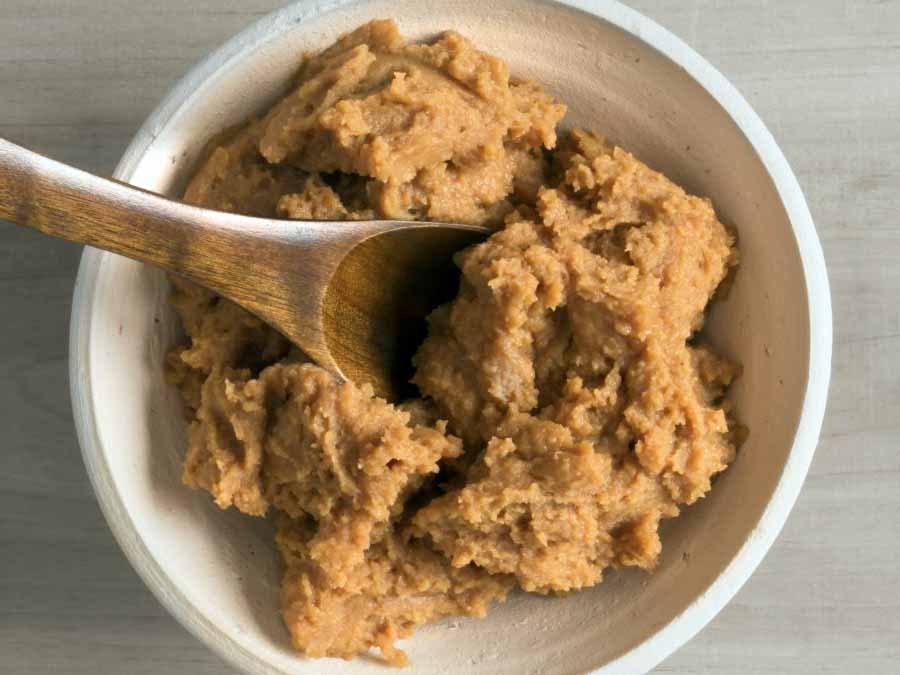
Image of miso paste
Miso Paste

What Happens if Your Dog Overeats Miso?

Too much intake of miso paste can cause different health problems in dogs. Firstly, your dog may experience stomach upset and digestion issues like loose stool and vomiting. In more severe cases, it can lead to serious health complications in your dog, like chronic pancreatitis and salt poisoning.

As the food is not directly poisonous, you need not panic. Instead, try to figure out the amount of miso it consumed and any signs of discomfort in your dog. Ultimately, visit the vet in case of any complicated situations.

What is Miso?

For those unfamiliar, miso is a traditional Japanese cuisine. It is a paste made from fermented soya beans and other grains like brown rice, barley, etc., with Aspergillus oryzae, a consumable fungus. Moreover, its texture is similar to peanut butter and can be taken raw or cooked.

Mainly there are three types of miso with varying flavors and colors. They are soybean miso (red), rice miso (white), barley miso (yellow), and awase miso (combination of red and white). When it comes to miso, a great tip is that: the deeper its color, the better the taste. Furthermore, it can be used for at least a year if stored in a freezer.

Apart from being tasty, it also comes up with many health benefits for humans. It is rich in mineral antioxidants, including manganese and copper.

It is also a good source of zinc and other elements like c, vitamin K, phosphorus, vitamin b2, fiber, choline, etc.

Dog-friendly Fermented Food

It’s surprising to learn that fermented food is good for your dog. They are a great inclusion to your pet’s daily diet. It can help maintain proper health and nourish your dog’s intestine.

So, which are the fermented foods suitable for a dog? Here’s the list of a few healthy fermented foods beneficial for dogs:-

  • Yogurt
  • Apple Cider Vinegar
  • Kimchee
  • Kefir
  • Fermented Vegetables
  • Tempeh, etc.

When including fermented foods in your canine companion’s diet, always initiate with a small portion. Examine over a week or two to avoid any potential digestion problems. Too much at once is not recommended as it can lead to serious health issues.

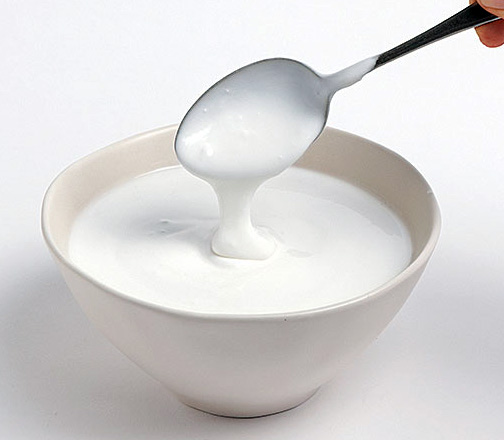
Image of yogurt
Homemade Yogurt

Conclusion

Miso is full of antioxidants and is a good source of natural vitamins. If fed in good proportions, it can not only make your pup happy but also provide it with some essential nutrients. However, regular and large servings should be avoided. To conclude, miso is a safe diet for dogs.

We hope this article provides clear insight on whether dogs can eat miso or not.

Heartland Docs Ben and Erin Schroeder Net Worth, Age, Kids.

Ben and Erin Schroeder are life partners who also double up as tv personalities. They feature on Nat Geo’s Heartland Docs. Ben and his partner are both certified veterinary officers who operate in the Nebraska area. Looking at Ben, we learned that he comes from a long line of vets.

As a child, he spent a great deal of time at his father’s animal clinic, which is where he developed a love for animals. His wife Erin grew up with a similar inclination towards animals. Here’s what we found about Heartland Docs Ben and Erin Schroeder’s biography and net worth.

Who is Ben Schroeder?

Image of Ben Schroeder
Ben Schroeder is an animal expert. He is famous for his work in Heartland Docs, DVM (2020) with his wife, Erin Schroeder

Dr. Ben Schroeder is animal health expert who presently runs Cedar County Veterinary Services. This was a veterinary clinic that was set up by his father back in the early 70s.

Owing to the fact that it was a family business, the ownership of the centre eventually passed on to Ben once his father was ready to retire.

As a child, Ben spent all of his childhood in the North-eastern area of Nebraska. His family owned a large farm, which also served as home for a wide range of animals.

Over the years, Ben would follow in his father’s footsteps, helping out at the clinic, and caring for animals in his free time. Aside from this, he also found a love for horseback riding, which he still takes up as a hobby today. Fresh off of high school, Ben took up a position as a Certified Beef Quality Assurance Trainer.

Schroeder spent several years training other farmers in his region, He taught them how to effectively care for their livestock in order to get the highest quality of beef from them.

Alongside several other trainers, Ben introduced cattle management techniques that helped farmers adhere to guidelines set by the American Beef Industry.

Who is Erin Schroeder?

Image of Erin Schroeder
Erin Schroeder is a veterinary officer. She is known for casting in a veterinary show called Heartland Docs, DVM (2020)

Dr. Erin Schroeder is a veterinary officer who is also affiliated with Cedar County Vet Services. Examining her background, Erin is a native of Westport, New York, and was raised along Lake Champlain.

As a little girl, Dr. Erin spent a great deal of time around ranch animals like horses. Additionally, she also got to raise a few cats and dogs, which explains her love for animals.

Even before she got to college, Erin knew that she wanted to be a vet. It put her on a path that led to Syracuse University, where she attained a degree in Biochemistry.

Aside from her veterinary credentials, Erin is also very familiar with interior design and DIY projects. These are two interests she additionally shares with her husband.

Heartland Docs Ben and Erin Schroeder Age and D.O.B

Erin Schroeder was born on the 21st of Janu

ary, in the early 80s. Most people speculate that she was born in 1981, which would mean that she just turned 40. Her husband was also born in the same year, as the two were in the same college class back in 2001. Ben, however, celebrates his birthday on the 21st of July. This also suggests that the Heartland Docs star is in his early 40s.

Net worth and Income

Ben and Erin generate a majority of their income from their health business, particularly as they cater to animals across Nebraska. As such, their clinic offers a wide range of services, including wellness exams, comprehensive dental care, routine surgery, and even preventative care. In addition to this, the clinic also offers Dairy Herd Health Consultation and Production Services.

Other than that, the couple additionally make money from their work with Nat Geo Wild. It is reported that the couple make an average of $15,000 to $20,000 for every episode of Heartland Docs.

As such, they have already made over $400,000 in the three seasons the show as been on air. Currently, Ben and Erin Schroeder’s net worth is estimated to be $250,000.

Ben and Erin Schroeder relationship history

Ben and his partner Erin have enjoyed a long storied romance that dates to their time in College. Back in the early 2000s, they were both enrolled at Kansas State University’s College of Vet Medicine.

They would start dating in 2001, and before they even graduated, all their friends were certain they’d end up together.

After they became registered vets, Erin decided to completely relocate from New York to Hartington, Nebraska. The change was jarring to say the least as Erin moved from a major fast paced city to a quiet town prone to tornadoes and blizzards.

Despite all this, Erin quickly found her footing and joined Ben at his father’s vet clinic. The two were married soon after, sometime in 2002.

Their kids.

Image of Bena nd Erin Schroeder with their kids, Charlie and Chase Schroeder
Bena nd Erin Schroeder with their kids, Charlie and Chase Schroeder

In total, Heartland docs Ben and Erin Schroeder have two children. Their first child, Charlie Schroeder, was born on the 3rd of June 2003, and will turn 19-years old this year.

His brother Chase was born two years after him, on the 25th of June 2005. Consequently, Chase will celebrate his 17th birthday this year.

Unsurprisingly, both boys are keen on joining the world of veterinary medicine. Despite being so young, both Charlie and Chase frequently help out at their family’s clinic. This would explain why they both feature on Heartland docs alongside their parents.

Ben and Erin have a passion for renovating houses

When they are not saving animals, Erin and her husband take the time to visit several historical buildings with an aim of investing in their reconstruction. The couple has built up an impressive real estate portfolio over the years,acquiring several historical buildings in the process.

These range from properties like Hotel Hartington, to the Globe. The latter dates back to 1901, when the property was used as a clothing house.

Their work did not go unnoticed, as the story was picked up by a local newspaper which documented all of their exploits in detail.

This caught the attention of tv network execs who wanted Ben and Erin to headline their own remodeling show. They were not interested however as they were focused on their veterinary clinic.

Heartland doc tv show biography.

Image of Heartland Docs stars, Ben and Erin Schroeder
Heartland Docs stars, Ben and Erin Schroeder

Heartland doc is a show that documents the work of the Schroeders at Cedar County Veterinary Service. The first episode dropped back on the 25th of January 2020, airing on Nat Geo Wild.

Fans finally got to follow Ben and his partner as they zipped around rural Nebraska, helping animals in need. Most of their patients stay within a 300-mile radius, making it easier for the couple to tend to them.

So far, the show has been on air for two years now, releasing three seasons. Unsurprisingly, show-runners have already green lit a fourth season, which, is set to feature the couple’s sons in a larger capacity.

On average, the series has maintained a rating of 9/10 on IMDB. Across the 22 episodes that have been released, the Schroeders have treated over 20 different animal species. These range from aquatic creatures like turtles, to farm animals like cows.

Social Media Activity

Erin and Ben Schroeder are very active on social media platforms like Instagram, Twitter and Facebook, On Instagram, the couple have a page with around 19.6K followers.

Unsurprisingly, the shared page mostly focuses on their work as veterinary officers. There are a variety of animals on display, ranging from cats, horses, to cats. Aside from this, the page is also used to advertise up coming episodes of Heartland Docs, which, bolsters the show’s viewership.

Lastly, Charlie and Chase are also heavily featured on their parent’s instagram page. For instance, one particular post tells us that Charlie recently graduated from Wynot High, as a part of the 2022 class. He is now set to join university.