Gardeners World Monty Don Reveals Tragedy. Here’s what happened.

Monty Don, the renowned presenter of Gardeners’ World, recently shared heartbreaking news on his Instagram account. His beloved Golden Retriever, Nell, passed away after a battle with cancer. Despite the anticipation of his upcoming book release, Monty chose to postpone the news about the book in favor of honoring and remembering his dear Nell.

In a heartfelt tribute, the passionate gardener expressed his profound grief, saying, “I had intended to share news about my forthcoming book, set to be published next week, but that can wait because my cherished Nell departed from us last night. Nell’s journey began in June when she was diagnosed with cancer, and every day throughout this summer has been a precious gift, even though it has come to an end now.”

Monty and his family laid Nell to rest in their garden, right alongside Nigel, their other beloved canine companion. She was lovingly wrapped in one of Monty’s own jackets, surrounded by flowers, balls, and her favorite biscuits. Nell’s final moments were marked by tranquility and dignity, putting an end to her evident suffering. Yet, the pain of such a loss remains as heavy as ever.

Monty concluded with the understanding that life moves forward, but at this moment, they are overwhelmed with sorrow. This deeply emotional post is a testament to the deep bond between humans and their canine companions, reminding us of the poignant cycle of life and loss.


View this post on Instagram


A post shared by Monty Don (@themontydon)


Nell’s passing occurred merely three years after the loss of Monty Don’s Golden Retriever, Nigel. Nigel, a familiar face to the viewers of Gardeners’ World, also found his final resting place beside Nell in the family garden.


View this post on Instagram


A post shared by Monty Don (@themontydon)


The presenter has been flooded with support from friends and loyal fans. One person wrote:

“Oh, I’m so sorry to hear that Nell has gone to join Nigel – far too soon. May you find comfort in the presence of family – including the other dogs. Ned, in particular, will miss her terribly.”

While another added:

“Shocking and incredibly sad news. We noticed Nell hasn’t been on Gardeners’ World much recently and wondered why. She was such a lovely girl and has been taken far far too soon. Life is not fair. So sad for you and the family, including the remaining dogs.”

The loss of a cherished canine companion is an incredibly emotional and challenging experience for any dog owner. Regardless of whether it’s a sudden loss or one that you’ve had time to prepare for, there is no adequate preparation for the pain of saying goodbye to a beloved pet. If you’re seeking meaningful ways to honor and remember your beloved dog after their passing, here are seven beautiful suggestions to help you commemorate their memory.
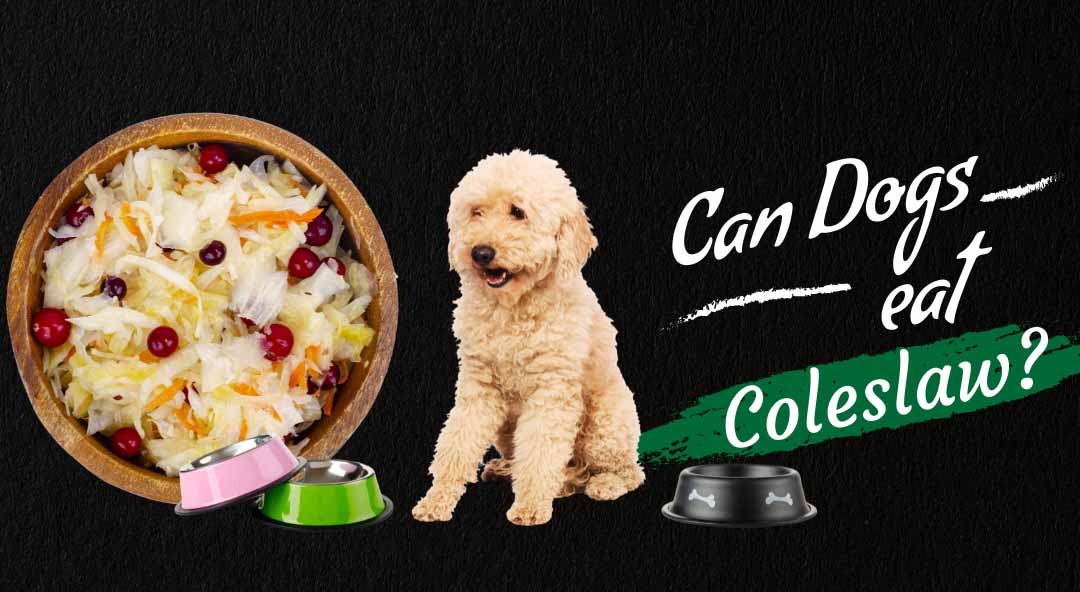

Can Dogs Eat Coleslaw? Everything You Should Know

Unlike humans, dogs do not need variety in their food. Dogs should constantly be fed with nutritious pet feed in a balanced proportion. However, as a dog owner, it is obvious to share your meals and offer human food with your furry friend as a treat occasionally.

While many people’s food is safe for dogs to consume, some are highly vulnerable and even fatal if consumed. Before you let your dog consume human food, make sure you know what’s healthy for him and what will make your buddy unwell.

This article will guide you through feeding your dog with one of the human food, Coleslaw. So, let’s dive into its main components and discover if dogs can eat coleslaw or not.

Can Dogs Eat Coleslaw?

Sadly, it’s a no. Although it is not harmful if your dog consumes it accidentally, you should not feed it frequently on purpose. It does not supply any nutritional value to your canine companion.

Besides, it can also lead your dog to suffer from gastrointestinal upset and other serious health issues.

What is Coleslaw?

Coleslaw comes from the Dutch word koolsla, meaning ‘cabbage salad.’ It is alternatively known as cole slaw or just slaw.

Basically, it is a salad consisting of raw cabbage and other vegetables with a condiment, either mayonnaise or vinaigrette. People also use buttermilk and mustard as a substitute for mayonnaise.

Coleslaw is believed to be consumed in its most basic form since the mid-eighteenth century. In recent years, it has been served worldwide with different variations in the recipe.

Image of Coleslaw.
Coleslaw

In the United States, it often goes along with hamburgers, hot dogs, and sandwiches. Similarly, it is served as a side dish with pizza in Sweden and cooked with chopped pepper and ham in Italy.

It is also majorly consumed in other parts of the world like Germany, Poland, Russia, the United Kingdom, etc.

Why is Coleslaw bad for dogs?

Well, it’s the ingredients that make the whole dish inappropriate for dogs.

The primary components of coleslaw are cabbage and mayonnaise. A small amount of cabbage is ok for dogs, but excess cabbage can cause serious stomach problems for your furry friends. Likewise, mayonnaise is rich in fat content. Excess intake of mayonnaise can increase the risk of pancreatitis and diabetes in dogs.

In addition, other elements of coleslaw unfavorable for dogs are:-

  • Onions
  • Salt
  • Sugar
  • Cream
  • Unnatural preservatives

Health Problems caused by Coleslaw

In general, consuming a small amount of coleslaw is not harmful to your dog. However, if you actively feed it, it can make your canine companion sick.

Below are the severe health complications caused by the intake of coleslaw:-

  • Problems of indigestion caused by cabbage
  • Anemia due to intake of onion
  • Excess salt can cause dehydration and high blood pressure
  • Sugar causes cavities, obesity, and diabetics
  • Diarrhea and vomiting due to indigestion

Best Alternative to Coleslaw

In place of coleslaw, there are various alternatives that your dog can consume safely. Dogs can have salad, but it should contain the ingredient safe for the dogs.

Some of the healthy fruits and vegetables to make a healthy salad for your fur baby are:-

  • Apples: provides fiber and fewer calories
  • Bananas: an excellent source of potassium
  • Blueberries: rich in antioxidants
  • Cucumber: very low calorie and a high source of water
  • Carrots: low-calories snack
  • Watermelons: supplies vitamins and potassium
Image of dog eating banana
Dog eating banana

Apart from fruits and vegetables, you can incorporate boiled eggs and chicken into the salad. These foods are healthy and do not contain any elements dangerous to your dog’s health. The best way is to feed a moderate amount to avoid the risk of gastrointestinal issues.

Conclusion

To conclude, coleslaw is a dish with many possible hazards to your dog’s overall wellbeing. As a conscious pet owner, it is better to remove it from your dog’s diet menu.

Your dog may be likely to have it, but it’s not a good choice as none of the above components are harmless for your furry friend.

We hope you get the necessary guidance on the side effect of coleslaw and decide whether dogs can eat coleslaw or not.

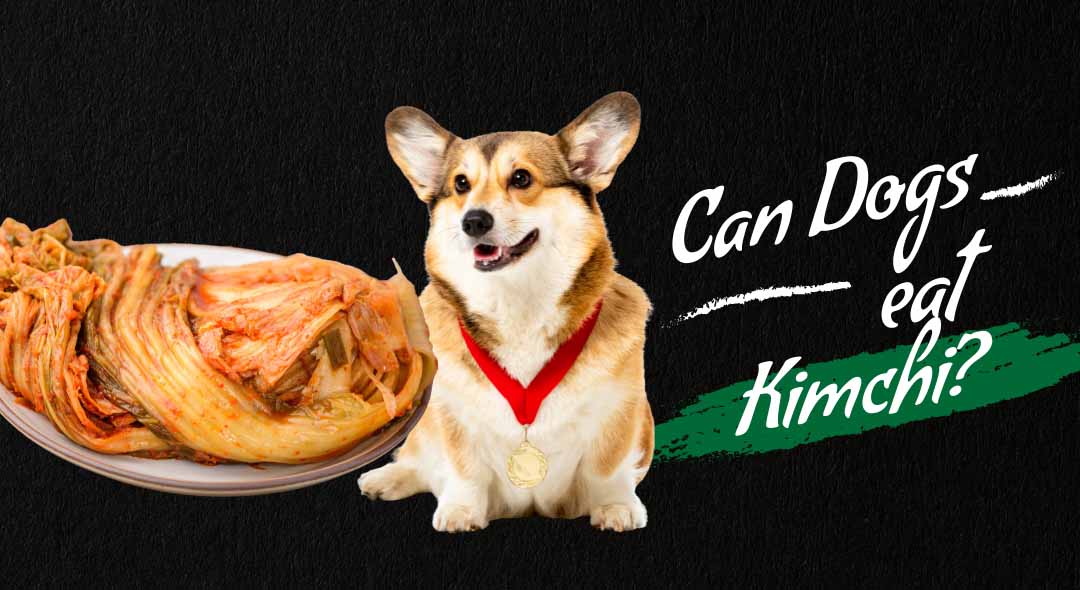
Can Dogs Eat Kimchi? Know Before You Feed Your Dog

Kimchi (known initially as Kimchee) is a popular Korean food. It is primarily made by fermenting cabbage along with other ingredients. However, the recipes can vary from place to place. Kimchi is famous for its unique taste and spice.

If you are a dog owner, you have probably noticed it looking toward you with hope when you are having a warm bowl of Kimchi. So, is it safe to share the dish with your fur friend? This article discusses whether dogs can eat kimchi or not.

Can Dogs Eat Kimchi? Is It Safe?

Fermented eatables are popular among humans and carry many health benefits. However, dogs are biologically different and have varying compatibility.

In the initial process of fermentation of cabbage, a lot of salt is added. Dogs have a greater sensitivity towards salt than humans. Thus, they can get salt poisoning pretty fast.

However, if Kimchi is consumed in a moderate amount, the salt is not present in a high enough amount to cause any harm.

Garlic is a known enemy to dogs and is a major component of Kimchi. But similar to salt, it is also not present in a sufficient amount to cause any harm.

In some sensitive dogs, it may show mild symptoms if the servings are quite large. Other than that, you can freely feed your dog if it’s an occasional thing. Here is a video of small dogs feeding on Kimchi.

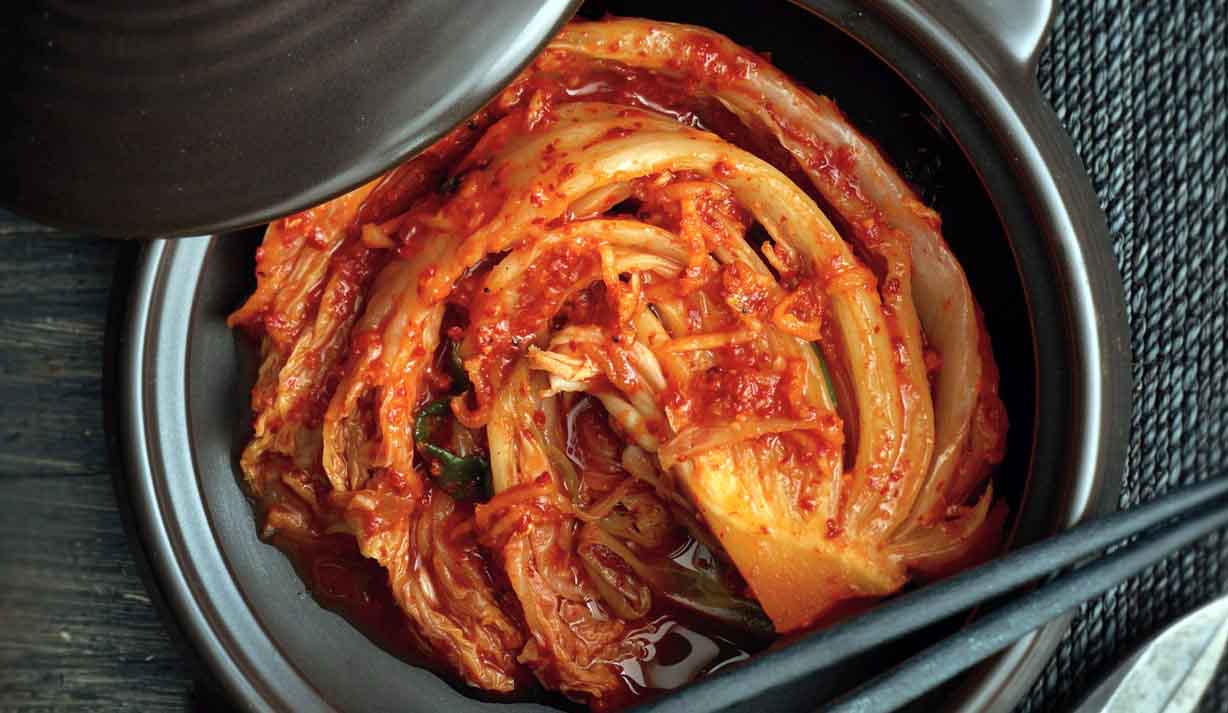
Image of Kimchi
Kimchi

What if Your Dog Accidentally Ate a lot of Kimchi?

Due to the salt and garlic content in Kimchi, it can be harmful to your dog if it eats a lot of the fermented food. The first thing that you should do is feed it a lot of freshwaters.

Water is the best salt neutralizer and also serves the purpose of hydration to counter the garlic and salt. As long as your dog does not show severe symptoms, which is rare, you should be fine with just giving it fresh water.

Conclusion

We saw a lot of varying opinions on the internet regarding feeding Kimchi to dogs. However, you can definitely give a taste to your dog in small proportions. Also, make sure not to feed it fermented and spicy foods regularly.

Kimchi is prepared differently in different places. Thus, knowing the individual ingredients used in the food product will help you decide.

We assume you got enough awareness on whether dogs can have Kimchi or not from this article in order to keep your dog safe.

Can Dogs Eat Meatballs? Find Out

Nobody can say no to some juicy meatballs, be it humans or dogs. They are full of nutrition and taste at the same time. However, is it okay to feed your fur friend these non-veg balls?

This article elaborates the conditions on which you can freely let your dog eat meatballs.

Can You Feed Meatballs to Your Dog?

Yes. Dogs can eat meatballs, in essence, meatballs are harmless to them. Some of the ingredients might pose a threat to your fur friend. However, they can be avoided entirely in the recipe.

Today, you can easily find meatballs that are curated explicitly for dogs. And in case you don’t want to go that length, you can also quickly look up recipes to cook dog-friendly meatballs at home. As a rule of thumb, it is better to avoid packaged meatballs as they will contain some ingredients like garlic and onions.

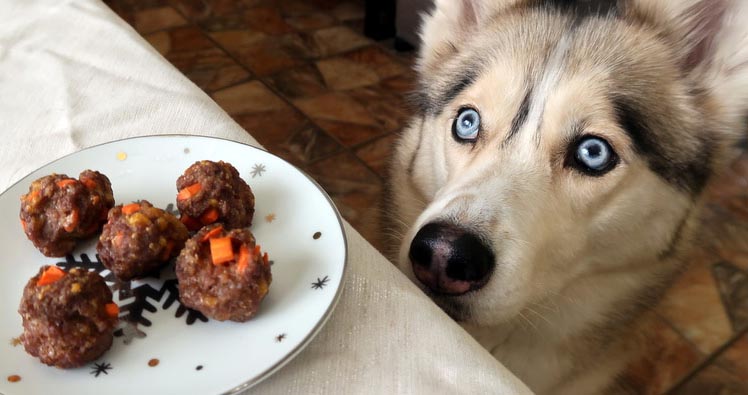
Image of dog staring at meatballs.
Dog staring at meatballs.

What Meatball Ingredients are Safe for Dogs?

Let’s start with the meat. They are tasty, healthy, and nutritious. But you must make sure that the meat does not have spices. Also, always cook the meat properly before moving forward with the recipe. Raw meat can pose health risks to both humans and dogs.

Meat is also vital for the proper growth of your puppy. It aids in bone development, making joints strong, and strengthening nails and coats.

Another safe ingredient is eggs. They provide nutrition and taste. Also, always choose breadcrumbs that have a low content of sugar and salt. The final safe ingredient is cheese. However, cheese is high in fat content and should only be added in a moderate amount.

Which Meatball Ingredients should be Avoided?

Dogs hate the strong spicy taste. They have heightened senses. Thus, anything that can come as a strong taste to humans will have even stronger effects on our paw friends.

Black Pepper, which is a popular meatball ingredient, should be avoided when making meatballs for dogs. Furthermore, it is better to keep the salt content as low as possible.

Garlic, in high amounts, is poisonous to dogs. Thus, it is better to avoid the ingredient altogether. Also, Onions are similar to garlic in their harm to canines. This is because of the presence of the N-Propyl Disulfide compound in both of these vegetables. It severely affects the RBS of dogs and can lead to anemia.

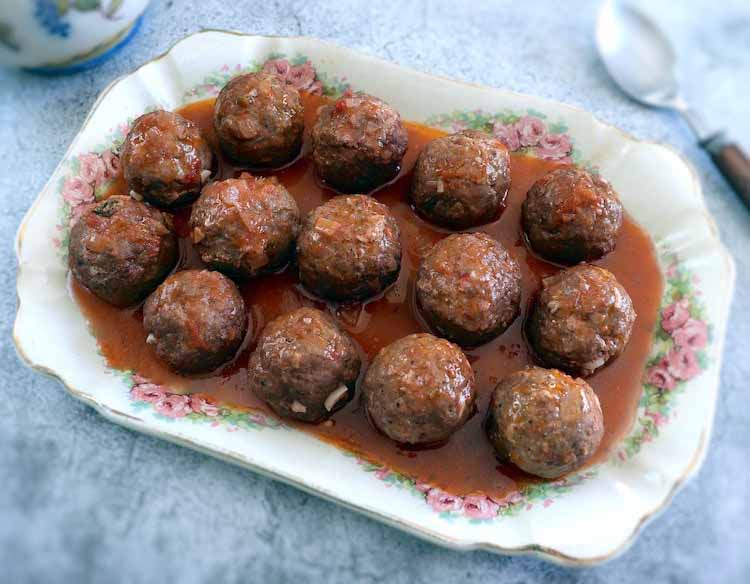
Image of meatballs
Meatballs

Summary Table

Ingredients Safe or not?
Meat Safe. It should be cooked appropriately and without spices.
Breadcrumbs Safe.
Cheese Safe in moderation.
Eggs Safe
Garlic Toxic
Onion Toxic
Salt It may cause salt poisoning. It should be used in a minimal amount.

Conclusion

Meatballs are the perfect food for your dog. However, you must be careful with the ingredients. As long as you are making the recipe on your own or you are purchasing meatballs made for dogs, you have nothing to worry about.

We hope this article provides enough elaboration and answers your question regarding whether dogs can eat meatballs or not.

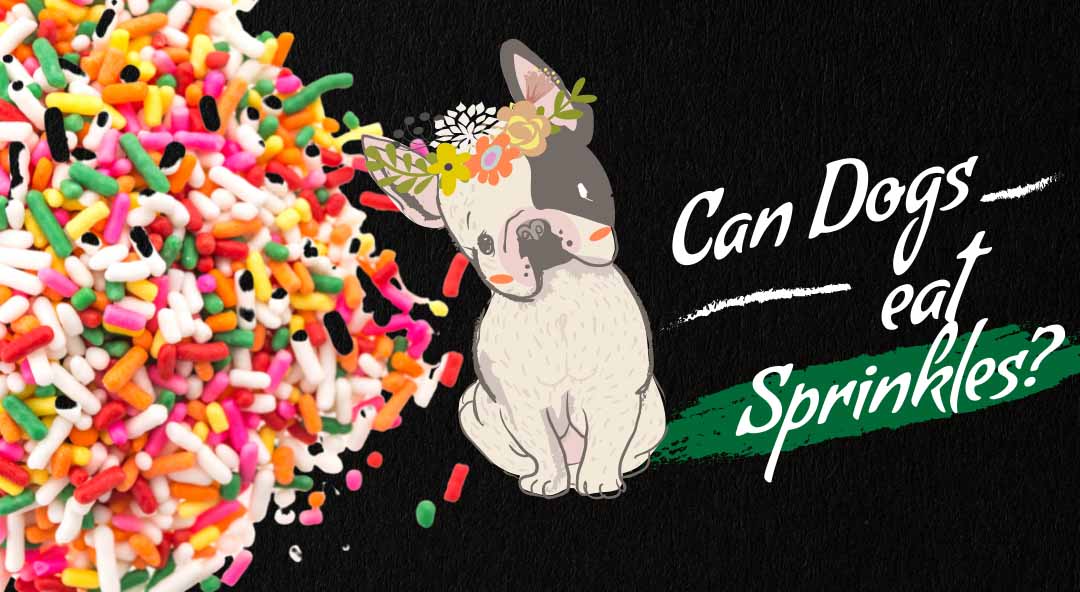
Can Dogs Eat Sprinkles? Know Before You Feed Your Dog

Sprinkles are popular celebratory sweets mainly due to their colorful nature. They are tasty as well as decorative.

As a pet parent, you might want to include some Sprinkles on your dog’s birthday or even just feed him occasionally as treats. So, is it safe?

This article clarifies if dogs can eat sprinkles. We also endow additional information relating to the treatment and its ingredients. Let’s dig in.

What Are Sprinkles?

Sprinkles are a mixture of sugar, cornstarch, corn syrup, and wax. They also consist of other artificial colorings and flavorings. Many of these ingredients do not sound healthy to feed to your pup. A 100-gram serving of sprinkles can contain up to 75 grams of Carbohydrates.

Can Dogs Eat Sprinkles?

Yes, dogs can definitely eat sprinkles. If you are hosting a birthday party or giving your pup a one-time treat, it is safe to do so. Even if you are giving it occasionally, say three times a week, a small serving of about 4 grams won’t do any harm.

Quality Dog Resources also thinks that most sprinkles are safe inappropriate size servings. However, you must note that they are not healthy.

The primary ingredient in sprinkles is sugar. That is what makes them so tasty and sweet. Sugar is bad for your pup because it can induce many health complexities like diabetes and tooth decay.

Furthermore, it can also disturb the metabolism of your dog. If your pup has a sensitive tummy, a moderate amount of sugar can cause diarrhea.

Image of sprinkles
Rainbow Sprinkles

Another ingredient in sprinkles is corn syrup. All syrups have a high sugar concentration and are thus harmful to your dog in excess servings. There is also cornstarch which can cause digestive problems for your pup.

Moreover, the presence of artificial coloring and flavoring is the most troublesome one. As a rule of thumb, anything artificial poses a certain threat to your dog’s health when served in large amounts.

Some sprinkles have red-40 written in the ingredient for artificial color. You should know that this chemical is derived from petroleum, which is definitely not safe for dogs or humans.

Thus, sprinkles are bad for your dog’s health. However, a small serving should not matter much unless it has an artificial sweetener like xylitol.

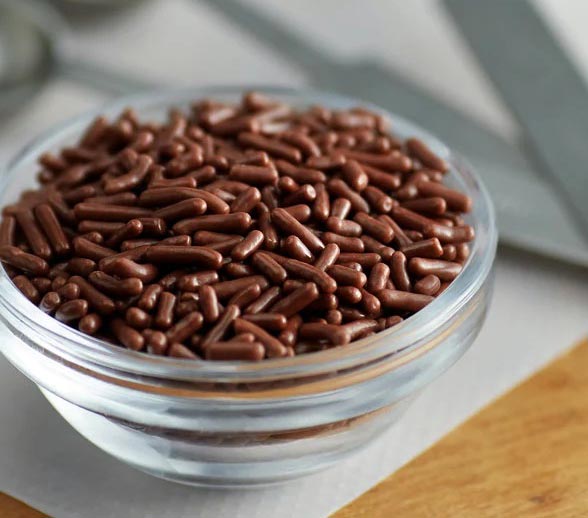
Are Chocolate Sprinkles Safe for Dogs?

You should keep your dog away from anything related to chocolate. Generally, chocolate consists of caffeine and theobromine, both of which are harmful to dogs.

The metabolism of dogs isn’t as strong as humans, and thus they cannot metabolize these compounds efficiently like us. This leads to a spike in their stimulus and can cause restlessness.

Chocolates can also be toxic to dogs in large quantities. Your dog might show signs of vomiting and diarrhea if it stole and ate your whole packet of chocolate.

Image of chocolate sprinkles
Chocolate Sprinkles

Are Rainbow Sprinkles Safe for Dogs?

Rainbow means colorful. Dogs are curious animals, and thus this mixture of colors will attract them. If you fail to lock the rainbow sprinkles safely in a locker, the chances are that your dog will invade and bite through the container. By the time you are home, it might be facing some severe stomach problems if it ate a lot of rainbow sprinkles.

Rainbow sprinkles are safe, but only when served in sizes less than 4 grams. If your dog consumes more than 10 grams of these sweets, it may face some tummy issues. If the symptoms are severe, you might consider talking to a vet.

Can Dogs Eat Sugar-Free Sprinkles?

It depends on the type of sweetener used to make the sprinkles sugar-free. Xylitol is one of the chemicals that factories use as sugar alternatives. Basically, xylitol is poisonous to dogs.

Even in small amounts, this chemical can be life-threatening and requires immediate attention if your dog eats some. So, sugar-free sprinkles with xylitol as a sugar alternative should be avoided at all costs.

If the sugar alternative is more plant and natural-based, like honey and stevia, it is safe to treat your dog. Honey is not only tasty but also beneficial for your dog’s health. Stevia is a natural alternative to sugar which isn’t toxic. Thus, you can feed your dog some sugar-free sprinkles if it has natural colorings and sweeteners.

What if Your Dog Ate Sprinkles?

The first thing you should be concerned about is the quantity. If your dog ate less than grams, you could let it be and keep it out of reach to prevent future invasions. However, please monitor your dog closely if the consumed quantity is large (10 grams and above).

In most cases, the dog will experience mild stomach pain and possibly diarrhea. If the dog is too sensitive and the symptoms are severe, you should see medical help immediately.

Summary Table

Items Safe or not?
Sprinkles Yes. But only in small proportions and on occasions.
Chocolate sprinkles Not safe.
Sugar-free sprinkles with Xylitol Poisonous.
Sugar-free with natural sweeteners Safe.
4-gram servings of regular sprinkles Safe.
More than 10-gram servings Not safe.

We assume you got enough insights on whether dogs can have Sprinkles or not from this article in order to keep your dog safe.

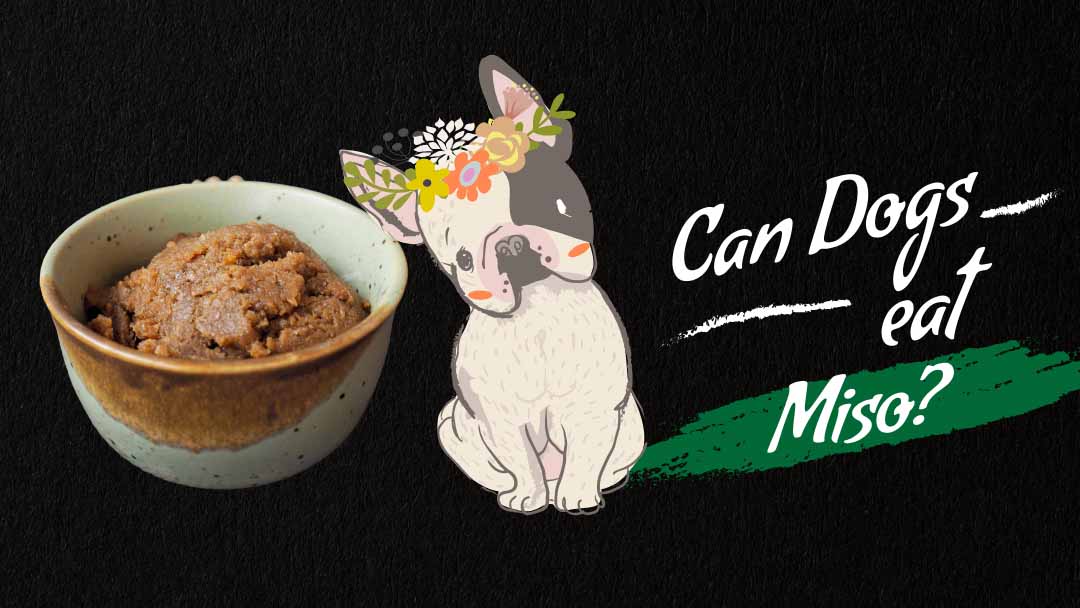
Can Dogs Eat Miso? Everything You Should Know

When it comes to fermented food, miso is one of the most popular among them. Fermented foods are always beneficial for the digestive health of both human beings and dogs. But because of the different metabolic systems, some of them are safe for dogs to consume, while others can be highly toxic and fatal.

Therefore, before sharing it with your furry friend, it is important to learn which fermented food is safe for dogs to consume. Otherwise, it can lead us to the emergency vet and serious complications.

In this article, we will discuss if your dog can eat miso. We will also provide some authentic information on the fermented food that will help to improve the gut and overall digestion of your dog. So, let’s begin.

Can Dogs Eat Miso?

Well, the answer is yes. Dogs can eat miso paste but only in a small amount. However, actively feeding your dog with a large amount of miso paste can be hazardous.

Basically, all the constituents of the miso paste are non-poisonous to dogs. Sadly, the final product in large amounts is not dog-friendly. Even if the food is not directly considered toxic, you should always feed your dog a fair amount.

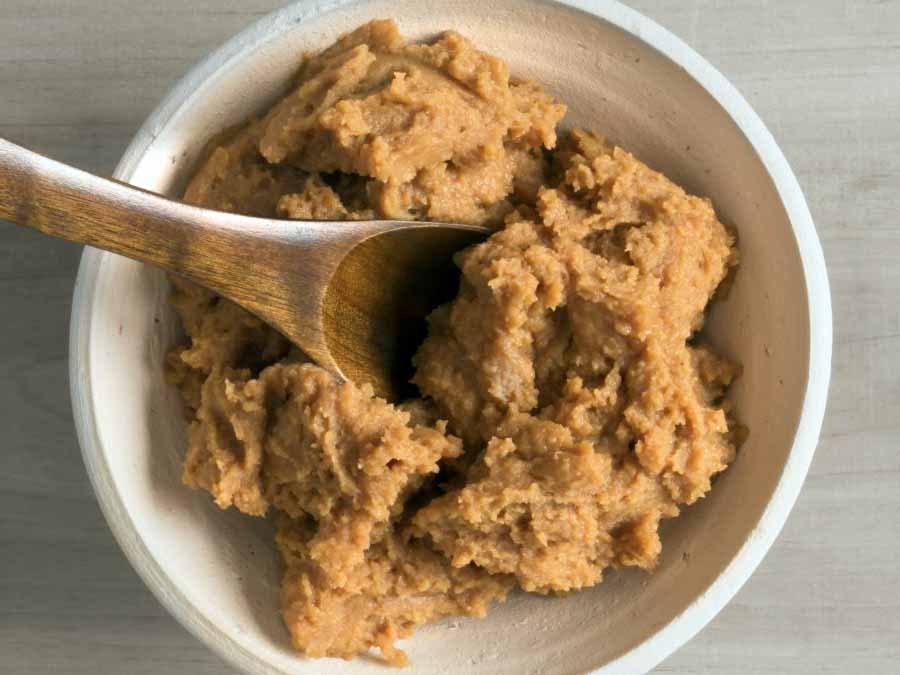
Image of miso paste
Miso Paste

What Happens if Your Dog Overeats Miso?

Too much intake of miso paste can cause different health problems in dogs. Firstly, your dog may experience stomach upset and digestion issues like loose stool and vomiting. In more severe cases, it can lead to serious health complications in your dog, like chronic pancreatitis and salt poisoning.

As the food is not directly poisonous, you need not panic. Instead, try to figure out the amount of miso it consumed and any signs of discomfort in your dog. Ultimately, visit the vet in case of any complicated situations.

What is Miso?

For those unfamiliar, miso is a traditional Japanese cuisine. It is a paste made from fermented soya beans and other grains like brown rice, barley, etc., with Aspergillus oryzae, a consumable fungus. Moreover, its texture is similar to peanut butter and can be taken raw or cooked.

Mainly there are three types of miso with varying flavors and colors. They are soybean miso (red), rice miso (white), barley miso (yellow), and awase miso (combination of red and white). When it comes to miso, a great tip is that: the deeper its color, the better the taste. Furthermore, it can be used for at least a year if stored in a freezer.

Apart from being tasty, it also comes up with many health benefits for humans. It is rich in mineral antioxidants, including manganese and copper.

It is also a good source of zinc and other elements like c, vitamin K, phosphorus, vitamin b2, fiber, choline, etc.

Dog-friendly Fermented Food

It’s surprising to learn that fermented food is good for your dog. They are a great inclusion to your pet’s daily diet. It can help maintain proper health and nourish your dog’s intestine.

So, which are the fermented foods suitable for a dog? Here’s the list of a few healthy fermented foods beneficial for dogs:-

  • Yogurt
  • Apple Cider Vinegar
  • Kimchee
  • Kefir
  • Fermented Vegetables
  • Tempeh, etc.

When including fermented foods in your canine companion’s diet, always initiate with a small portion. Examine over a week or two to avoid any potential digestion problems. Too much at once is not recommended as it can lead to serious health issues.

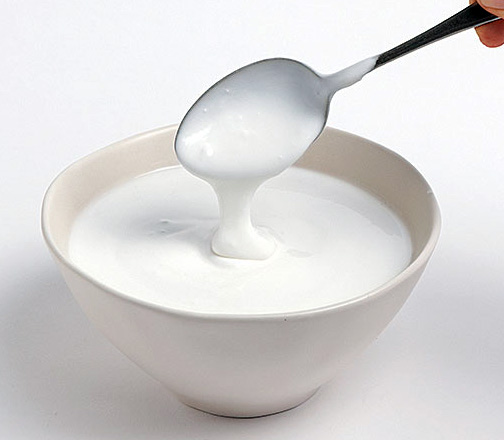
Image of yogurt
Homemade Yogurt

Conclusion

Miso is full of antioxidants and is a good source of natural vitamins. If fed in good proportions, it can not only make your pup happy but also provide it with some essential nutrients. However, regular and large servings should be avoided. To conclude, miso is a safe diet for dogs.

We hope this article provides clear insight on whether dogs can eat miso or not.

Can Dogs Eat Nopales? Find Out

Nopales are green vegetables that come from a cactus. Their taste is similar to green pepper and is used in a wide variety of dishes. In Mexico and Central America, people are really fond of this vegetable. We also see its consumption common in the Southwest US.

These cactus pads can be cooked with eggs or even made into pickles. They are rich in Vit A, C, K, and B6. In addition, they have other elements like Calcium and Potassium. Succulentalley thinks that this is among the good and nutritious cactus.

So, can dogs eat Nopales? Let’s find out.

Can Dogs Eat Raw Nopales?

A big NO! Nopales are rich in oxalates. This compound is very toxic to your pet dog. Some side effect of consuming this includes severe vomiting and upset stomach.

Furthermore, the cactus pads also have calcium oxalate crystals. They tend to be sharp and can damage the stomach lining upon consumption.

Nopales poisoning can be life-threatening for your dog. If the crystals damage the stomach lining, you will notice blood in your dog’s excreta. In that case, the best would be to rush it to the nearest vet immediately.

Furthermore, the raw plant can also cause other kidney failure issues and nausea.

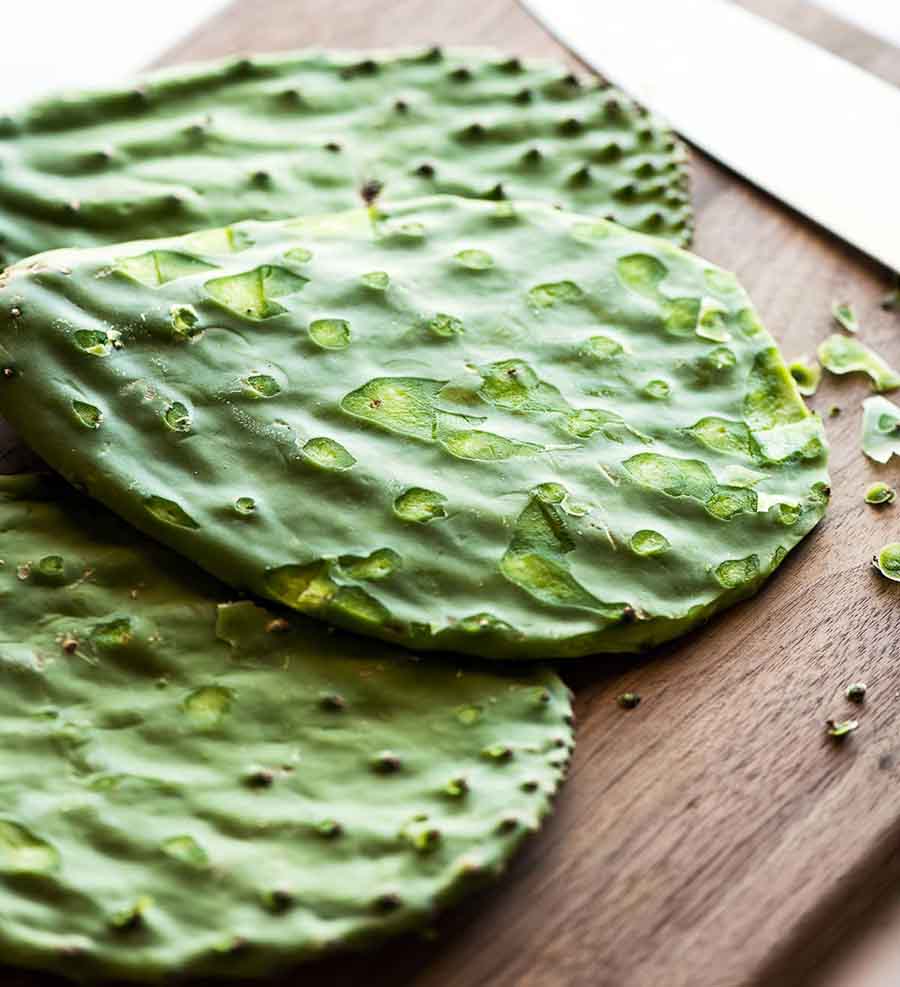
Image of raw nopales
Raw Nopales

Can Dogs Eat Cooked Napoles?

This question is up for debate. The calcium oxalate that is the major harmful ingredient is soluble in H2O. Thus, the crystals can break down when boiled in water.

If the Napoles are well cooked, it might be somewhat safe to let your dog eat a small amount. However, we do not recommend it, considering the harmful nature of the raw plant.

If your dog eats some Napoles, raw or cooked by chance, it is crucial to monitor its activities and symptoms.

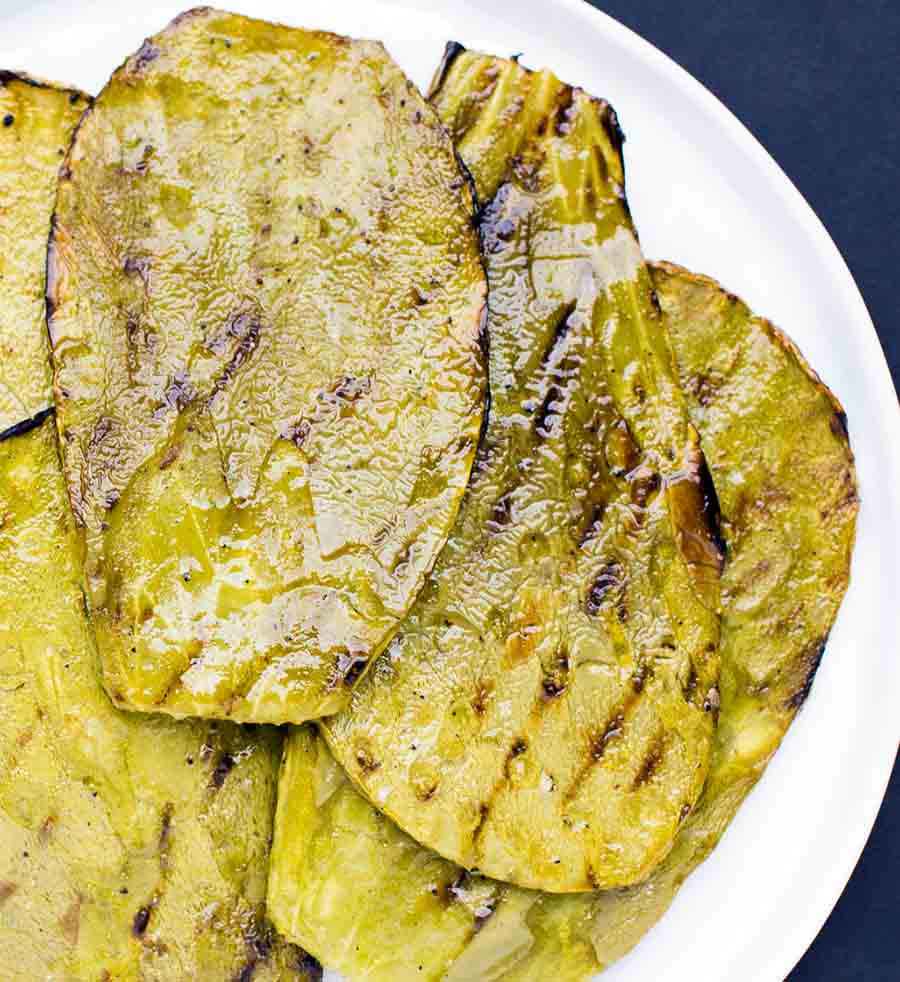
Image of cooked Nopales
cooked Nopales

Conclusion

Not everything that is edible to humans is enjoyed by dogs and vice versa. The oxalate crystals can cause severe damage to your pup’s mouth. And even if it is a large dog, there might be other complications. Thus, it would be best to avoid feeding Napoles to your dog.

We expect you to learn enough about whether dogs can get Napoles or not in order to keep your fur baby safe and sound.

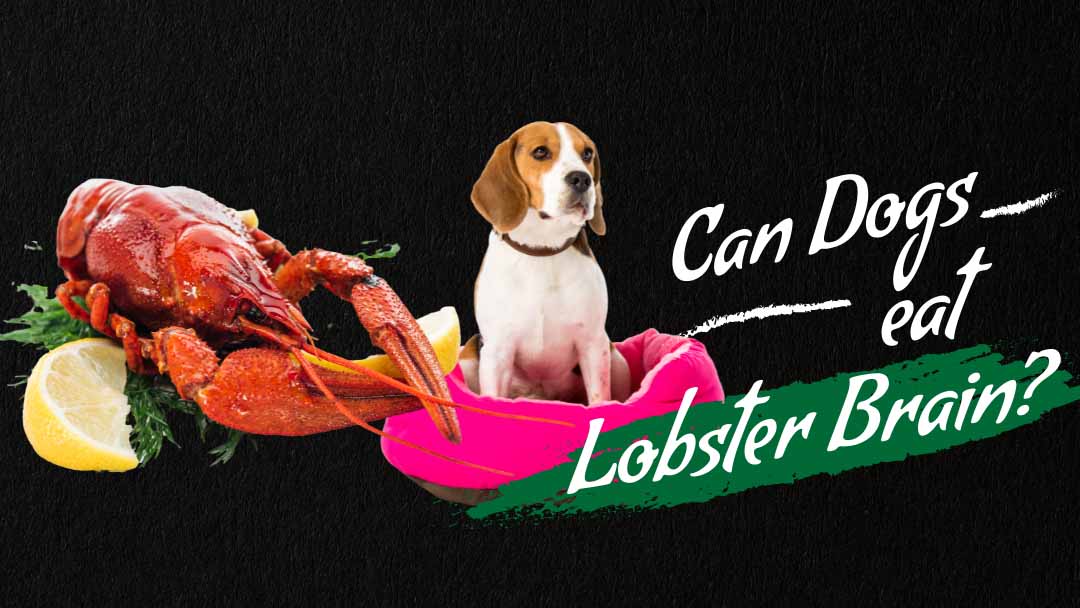
Can Dogs Eat Lobster Brains? Everything You Should Know

Lobsters are omnivorous sea creatures who are scattered across every single ocean in the world. As a delicacy, lobsters are typically prepared either by steaming or boiling them while in their shells.

While they are usually served as the main course of a meal, lobsters can be used in other meals, including sandwiches. Like humans, dogs also love to eat lobster.

This type of seafood has numerous health benefits, especially if consumed as a rare treat. But one thing we should note is that not all parts of the lobsters are edible. So, the question is, can dogs eat lobster brains?

Can dogs eat lobster brains?

Yes, lobster brains are good for dogs as they contain a variety of nutrients and minerals. First off, lobsters, in general, are foods with moderate levels of cholesterol. What this means is that your dog will be less likely to contract different types of heart diseases. Therefore, most veterinary officers will insist on a diet that doesn’t have high saturated fats.

The general rule would be to offer everything in moderation to decrease the odds of their systems being clogged by too much fat. Studies show that a portion of lobster, including lobster brains, contains roughly about 145 mg of cholesterol.

On average, most vets recommend that you provide about 1 mg of calcium and 22.5 mg of phosphorus in every meal. This is significantly lower than an egg, for instance, which has 187 mg of cholesterol. Additionally, eating lobster brains will also help strengthen your dog’s bones. It will keep their bones healthy and promote good nerve function.

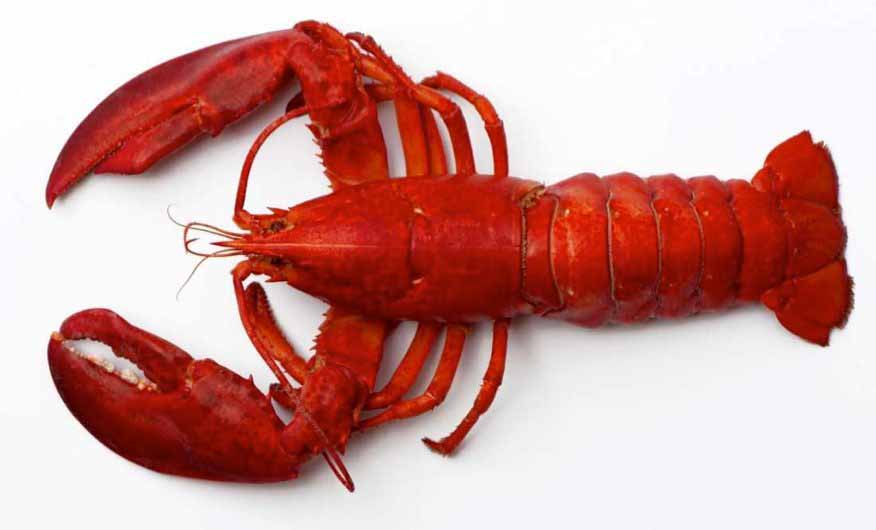
Image of Lobster
Lobster

Much like other protein sources, lobster brains will also facilitate the development of healthy and strong muscles. Lastly, lobster brains can also boost decent brain function. This is because they are full of omega-3 fatty acids, which, as you know, are polyunsaturated fats.

They not only improve brain development but also help prevent heart disease. Lastly, lobster brains are also full of essential nutrients and vitamins that will improve your dog’s immune system. These range from minerals such as vitamin B12, zinc, and magnesium.

Are there any risks involved in feeding your dog lobster brains?

The most glaring risk involved in giving your dog lobster brains is that you run the risk of flooding their system with high levels of sodium. If not kept in check, this can lead to an inflamed pancreas, which can lead to death. Other than this, there is also a chance that your dog might be allergic to lobster brains.

If this is the case, then your pet may experience symptoms such as abdominal discomfort, vomiting, and even skin irritation. Stop giving your dog lobster brains if they experience any of these side effects. Moreover, monitor your pet to see if their condition worsens while providing plenty of water as well.

Lastly, the lobster’s outer cover can be a choking hazard if not correctly dealt with. Failure to remove the lobster’s shells could potentially cause intestinal blockages and damage your dog’s digestive system.

How to prepare lobster brains for your dog?

The first thing you need to remember is to avoid the use of things like spices and seasonings, which can cause your dog’s stomach upset.

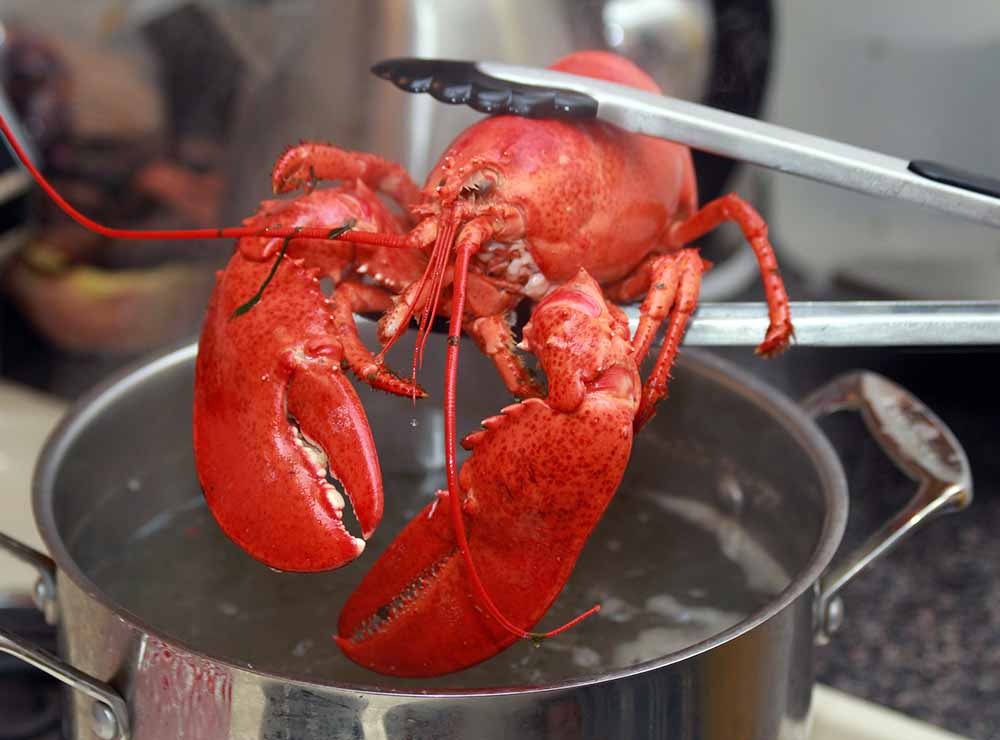
Moreover, avoid methods of preparation that involve frying and oils in general. The best way to go is to boil the entire lobster in a steaming pan. Preparing the lobster in boiling water will ensure that all parasites and bacteria are killed off.

Image of boiled lobster
Lobsters should be boiled for dogs.

It would be best if you also remembered to keep the lid on the plot closed and leave the lobster cooking for up to 20 minutes. Once cooked, sieve out the excess water, then start cracking the hard surface to get to the lobster brain. Make sure that all the shell from the lobster is removed before you offer any of the soft meat to your dog.

Moreover, you should also be careful when it comes to portion control when it comes to feeding your dog lobster brains. This means that lobster brains should only be treats and not make up the bulk of your pet’s diet.

This should answer all your misunderstandings regarding whether dogs can eat lobster brains or not.

Can Dogs eat Funyuns? Know Before You Feed to Your Dog

Funyuns are a popular type of onion-laced snack that was first brought into the market back in the late 60s. Some of the most common ingredients in funyuns include enriched cornmeal, starch, salt, flour, and onion powder.

Funyuns are a fun kind of snack that can be enjoyed at any point of the day. Owing to their popularity, several flavors have been invented over the years. These include Chilli & Limon, Wasabi, Steakhouse onion, and Flamin’ hot.

Will dogs experience any adverse effects if they consume these snacks? Let’s see if dogs can eat funyuns or not.

Is Funyuns good for dogs?

The simple answer is no, funyuns are not suitable for dogs. As such, our canine friends should altogether avoid consuming funyuns. Not only do they contain too much salt, but they are also full of fat, boasting no nutritional benefit to them.

In fact, these snacks have such a high-fat content that it would only take a few pieces of funyuns to exceed your dog’s allocated fat intake. The fact that they are small, crunchy, and tasty shouldn’t overlook that they will still be dangerous to your pet’s digestive tract.

Nutritional Facts (74.4 grams/13 pieces)

Sodium 280 mg
Calories 140
Cholesterol 0 mg
Potassium 40 mg
Protein 2 g
Total Fat 7 g
Total Carbs 19 g
Sugars 2 g

As you can see, Funyuns do not offer any nutritional value to your dog. In fact, they just put them at risk of developing several health complications. Because of this, dogs should not eat funyuns at all, not even in moderation.

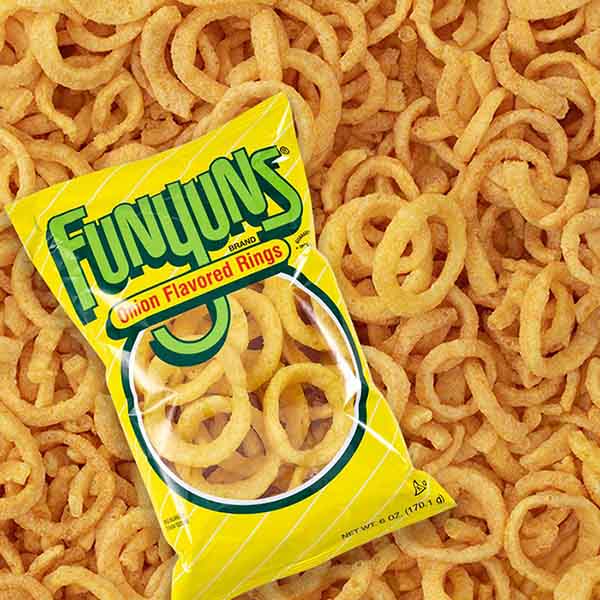
Image of funyuns
Funyuns

Risks involved with feeding your dog Funyuns

As we have already mentioned, one of the critical components of funyuns is salt. A regular serving of funyuns contains approximately 280 mg of salt. Most experts will confirm that too much salt is not good for your dog’s health. Their salt intake should be limited and dependent on their overall size.

For instance, a 30-pound dog cannot have more than 100 mg of salt every day. This means that even one serving of funyuns would completely disrupt their digestive system and lead to sodium poisoning. If left unchecked, this could potentially lead to death.

A few symptoms to look out for include laziness, vomiting, an overly thirsty dog, dehydration, kidney failure, seizures, and even muscle tremors.

The first thing you should do is to provide an adequate supply of water because of the potential risk of dehydration. Most experts recommend calling your vet at once if the situation worsens.

Other than salt poisoning, dogs should not be allowed to eat funyuns because of the presence of MSG flavor enhancers.

Multiple studies have revealed that Monosodium glutamate (MSG) could potentially damage your pet’s brain. If that’s not worrying enough, the consumption of funyuns is also toxic to your dog’s kidney and liver.

If your dog manages to steal a few funyuns from the kitchen, then you should promptly give him a few tablespoons of Pepcid or Pepto-Bismol.

Your dog additionally runs the risk of becoming obese if he eats too many funyuns. Even a gram of sugar would be too much for them, potentially resulting in obesity or even diabetes.

In extreme cases, the sugar prevalent in funyuns can also cause pancreatitis. Like us, excessive sugar content can also cause your furry friend to experience tooth decay. Lastly, funyuns are also bad for our furry friends owing to their concentrated onion and garlic content.

Regardless of whether they are served raw, cooked, steamed, fried, or in powdered form, onions remain hazardous to dogs.

Though funyuns only have about 2% of onion content, eating enough of them could still cause digestive distress. Most onion products contain N-propyl disulfide, a dangerous compound that will attack your pet’s red blood cells.

This will not only cause anemia but also enlarge your dog’s blood vessels. Other symptoms to be on the lookout for include lethargy, vomiting, and too much drooling.

Final Thoughts

The moderation rule does not apply to funyuns. Dogs should not consume funyuns in any capacity, even as a treat. They can cause too many problems, thus increasing the number of times you’ll need to see your vet. Despite your love for funyuns, try to keep this snack away from your furry friend.

Hope the article answers all the questions on whether dogs can eat funyuns or not.

Can Dogs Eat Ants? Everything You Need to Know

Ants are one of the most common insects around the world. Since they are so readily available everywhere, they occasionally find their way to your dog’s eating bowl. In some cases, even your dog can go on the hunt for ants.

For dog owners troubled with issues, we are here to elaborate on whether it is safe to let your pup feed on ants. Furthermore, we’ll also tackle some similar questions pertaining to the topic. Let’s dive in.

Can Dogs Eat Ants?

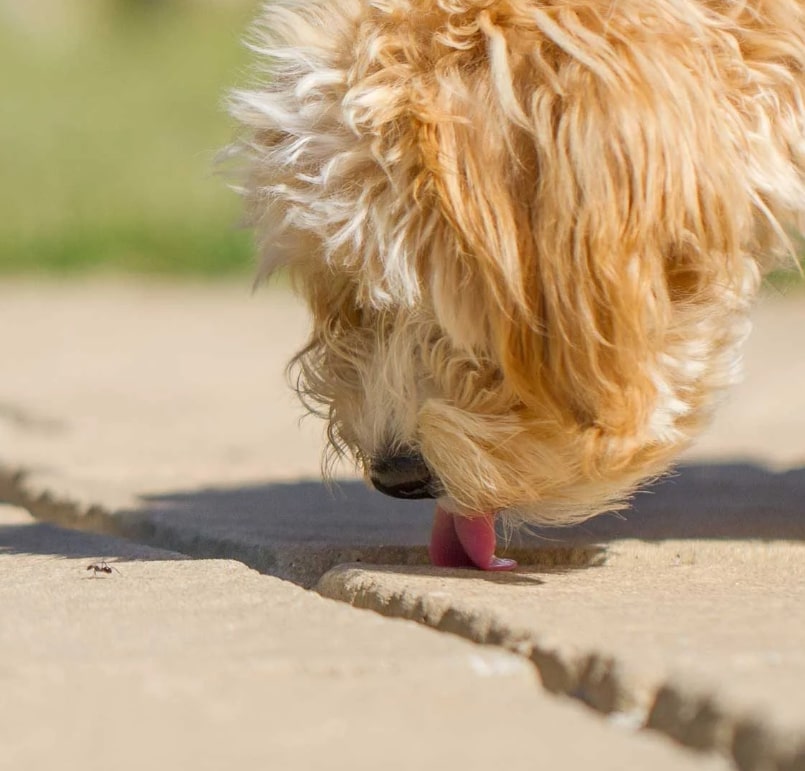
Image of a dog eating ants on the ground
Dog eating ants on the ground.

Yes, it is safe for a dog to eat ants. In fact, they can also be a great source of vitamin C and protein for your pup. We usually dislike ants for their irritating and somewhat-painful bites. However, humans are renowned for having eaten many types of insects throughout history. And it won’t harm your pup to feed on some of these tiny creatures.

Please keep in mind that it is only safe for dogs to eat classic black, tiny, and harmless ants. Fire and red ants should be avoided at all costs as they are very aggressive. Some dogs are allergic to ants, and they won’t touch their bowl if they see ants crawling in it. However, there are also other dogs that search and eat ants to satisfy their prey drive and curiosity.

Why Do Dogs Eat Ants?

During our research, we came up with three reasons why a dog might eat ants. The first and most common is that they don’t even notice them. Ants are sweet frenzy, and anything that has sugar or sweetness in them will attract an army of ants. As your pup is munching on its favorite food, it will seldom notice swallowing a couple of ants.

The second reason is their curious nature. Dogs are fast learners, thanks to their curiosity. They like to play with and taste things that are new to them. Thus, your dog might eat ants purely out of curiosity to know what it is that they are dealing with.

Finally, dogs are natural hunters. And sometimes, their prey drive kicks in, and they start demolishing these tiny creatures. However, as long as the ants don’t seem dangerous, you can let your dog enjoy its hunt. After all, a bit of vitamin C and some protein will not do any harm.

How to Get Rid of Ants from the Dog Food?

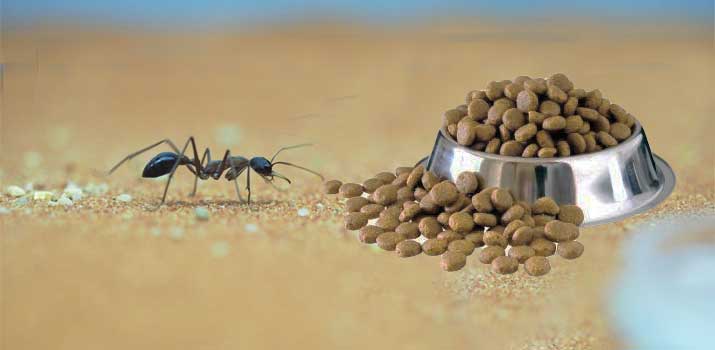
Image of ants crawling through the dog food bowl
Ants crawling through the dog food bowl

If you ever see a lot of ants in your dog food, chances are they have built up a colony nearby. Even if your dog likes eating ants, eating a whole swarm of them is never recommended. Let’s see how you can get rid of these tiny insects.

Chances are, the ants have already infested the dog food. Thus, we advise keeping the food container air-tight to prevent any future invasions. If your dog likes to stroll around while eating, some ants might invade the food bowl. You can deal with this by putting the bowl in a dish full of water. The water will act as a barrier that the ants can’t pass.

Instead of food, if the ants have infested your dog’s body, there are some easy solutions for it. The most convenient one would be to give your dog a deep bath. You can also use your lint roller on its thick fur. And finally, you can use a bristled brush to drag those invasive insects out of your pup’s body.

What Happens if My Dog eats Ants?

According to Dog Advisory Council, it is harmless for your dog to eat ants. However, if your dog has eaten ants in excess, it might experience some complications.

The first one is allergic reactions. Some dogs are naturally allergic to ants. It may result in rashes and irritation in your dog. Thus, you should refrain from treating itself to ants even if it likes it.

Moreover, your dog may face some stomach issues in case of excess feeding on ants. Ants are full of protein, and it will be tough for your pup to digest all of them.

Conclusion

There is no harm in letting your dog eat ants. However, you must know where to draw the line. It also depends on the type of ants, as the red and fire ants can be quite a nuisance.